การปรับตัวของครูไทยในยุค AI: ความท้าทายและโอกาสในการพัฒนาวิชาชีพ
คำสำคัญ:
ครูไทย, ปัญญาประดิษฐ์, Generative AI, การปรับตัว, การพัฒนาวิชาชีพบทคัดย่อ
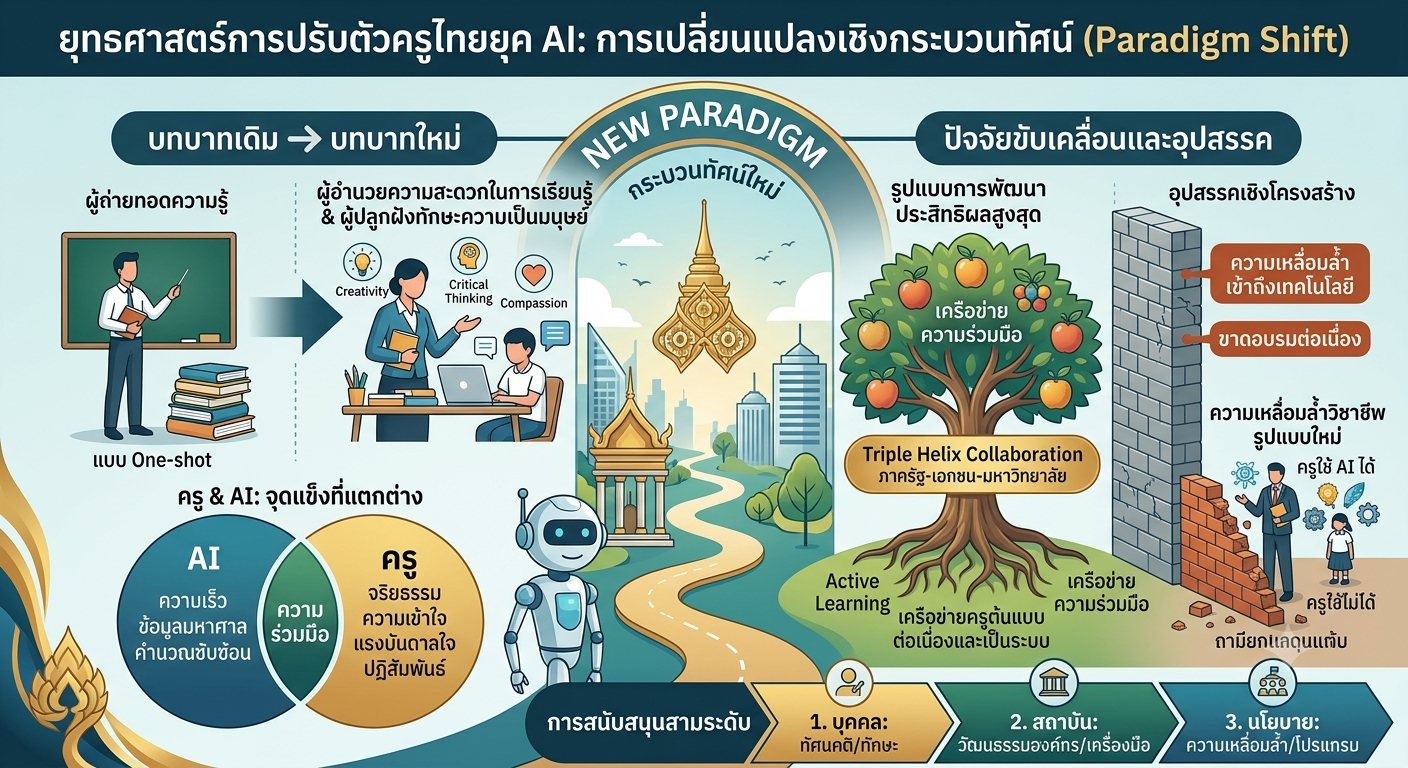
บทความวิชาการนี้มุ่งวิเคราะห์การปรับตัวของครูไทยท่ามกลางการเปลี่ยนแปลงอย่างรวดเร็วจากเทคโนโลยีปัญญาประดิษฐ์ (Artificial Intelligence: AI) โดยเฉพาะ Generative AI ซึ่งกำลังเปลี่ยนโฉมภูมิทัศน์ทางการศึกษาอย่างมีนัยสำคัญ การศึกษาครั้งนี้ใช้การวิเคราะห์เอกสารและสังเคราะห์งานวิจัยที่เกี่ยวข้องทั้งในและต่างประเทศ เพื่อนำเสนอภาพรวมของความท้าทายสำคัญที่ครูไทยเผชิญอยู่ ได้แก่ การขาดความมั่นใจในการใช้เทคโนโลยี ความเหลื่อมล้ำในการเข้าถึง การขาดระบบการอบรมที่ต่อเนื่องและเป็นระบบ รวมถึงข้อกังวลด้านจริยธรรม AI ในขณะเดียวกัน บทความนี้ยังชี้ให้เห็นโอกาสอันสำคัญที่ AI มอบให้แก่วิชาชีพครู ทั้งในด้านการเพิ่มประสิทธิภาพการสอน การจัดการเรียนรู้เฉพาะบุคคล และการยกระดับบทบาทครูสู่ความเป็นผู้อำนวยความสะดวกในการเรียนรู้ ผลการวิเคราะห์นำไปสู่ข้อเสนอแนะเชิงนโยบายและแนวทางปฏิบัติ อาทิ การพัฒนาโปรแกรมฝึกอบรมครูแบบ Active Learning การบรรจุ AI Ethics ในหลักสูตรครู การสร้างเครือข่ายครูต้นแบบ และความร่วมมือระหว่างภาครัฐ เอกชน และสถาบันอุดมศึกษา
เอกสารอ้างอิง
กัญชลารักษ์ กัญชลารักษ์ ทีปกากร. (2568). การเรียนรู้กับ AI ในปี 2568: ครูไทยปรับตัวอย่างไรในยุค Generative AI. ราชสีมาปริทัศน์, 1(2), 1-10.
นฤภัค สันป่าแก้ว สันป่าแก้ว. (2566). แนวทางการส่งเสริมครูในการจัดการเรียนรู้ในยุค AI. วารสารวิจัยนวัตกรรมการศึกษาและเทคโนโลยี, 1(2), 44-50.
พระมหาภราดร ภูริสฺสโร (สุวรรณรัตน์) ภูริสฺสโร (สุวรรณรัตน์). (2568). การบริหารมหาวิทยาลัยในยุค AI: ความท้าทายและการปรับตัว. วารสารบัณฑิตศึกษาวิชาการ, 3(3), 115-123.
วันวิสา เสียงสนั่น. (2568). ครูยุคใหม่กับ AI: การอยู่ร่วม การปรับตัว และการใช้เทคโนโลยีเพื่อเพิ่มคุณภาพการเรียนรู้. ราชสีมาปริทัศน์, 1(2), 22-34.
สำนักงานเลขาธิการสภาการศึกษา. (2568). ผลกระทบของ AI ต่อบทบาทครูผู้สอน. สืบค้น 18 มีนาคม 2568 จาก. https://www.onec.go.th/th.php/page/view/Outstand/6456
เพ็ญสุดา หิรัญเกิด. (2566). แนวทางการพัฒนาความเป็นครูมืออาชีพในยุคดิจิทัลของครู สังกัดสำนักงานเขตพื้นที่การศึกษาประถมศึกษาพิจิตร เขต 1. วารสารสังคมศาสตร์ปัญญาพัฒน์, 6(2), 395–404.
Dweck, C. S. (2016). Mindset: The new psychology of success. Ballantine Books.
Etzkowitz, H., & Leydesdorff, L. (2000). The dynamics of innovation: From national systems and "Mode 2" to a Triple Helix of university-industry-government relations. Research Policy, 29(2), 109-123.
Holstein, K., McLaren, B. M., & Aleven, V. (2019). Co-designing a real-time classroom orchestration tool to support teacher-AI complementarity. Journal of Learning Analytics, 6(2), 27-52.
Mishra, P., & Koehler, M. J. (2006). Technological pedagogical content knowledge: A framework for teacher knowledge. Teachers College Record, 108(6), 1017-1054.
Mishra, P., & Koehler, M. J. (2009). Too cool for school? No way! Using the TPACK framework. Learning & Leading with Technology, 36(7), 14-18.
OECD. (2023). Artificial intelligence in education: Challenges and opportunities for policy. OECD Publishing. https://www.oecd.org
Redecker, C. (2017). European framework for the digital competence of educators: DigCompEdu. Publications Office of the European Union. https://doi.org/10.2760/159770
Sadasivan, M., Jin, L., & Chen, Y. (2024). Generative AI and its role in next-generation educational technologies. Computers & Education: Artificial Intelligence, 5, 100132.
UNESCO. (2024). Guidelines for the ethical use of AI in education. United Nations Educational, Scientific and Cultural Organization. https://unesdoc.unesco.org
University of San Diego Professional & Continuing Education. (2024). AI in education: What educators need to know. https://pce.sandiego.edu/artificial-intelligence-in-education/
Zawacki-Richter, O., Marín, V. I., Bond, M., & Gouverneur, F. (2019). Systematic review of research on artificial intelligence applications in higher education. International Journal of Educational Technology in Higher Education, 16(1), 1-27.
ดาวน์โหลด
เผยแพร่แล้ว
รูปแบบการอ้างอิง
ฉบับ
ประเภทบทความ
สัญญาอนุญาต

อนุญาตภายใต้เงื่อนไข Creative Commons Attribution-NonCommercial-NoDerivatives 4.0 International License.
##default.contextSettings.thaijo.licenseTerms##




