GUIDELINES FOR DHAMMADUTA BHIKKHUS DISSEMINATION OF BUDDHISM IN THE REPUBLIC OF KOREA
Keywords:
Buddhism Dissemination, Overseas Dhammaduta Monks, IddhipadaAbstract
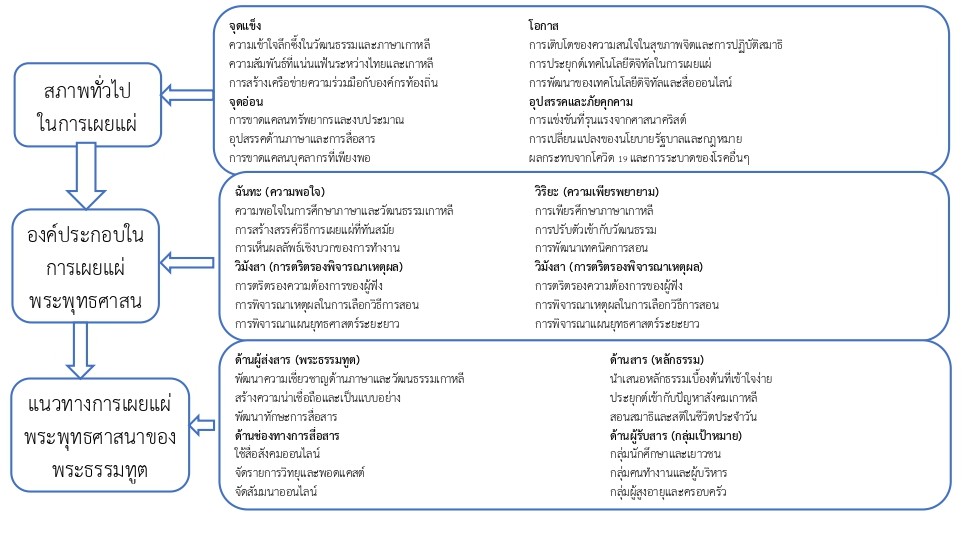
Objectives of this research article were: 1. To examine the general conditions of Buddhism dissemination by Dhammaduta monks in the Republic of Korea, 2. To study the components of Buddhism dissemination by Dhammaduta monks in the Republic of Korea, and 3. To propose effective approaches for Buddhist dissemination by Dhammaduta monks in the Republic of Korea, This qualitative research employed in-depth interviews as the primary data collection tool, gathering data from Dhammaduta monks working in the Republic of Korea. The study used purposeful selection based on representative characteristics of appropriate groups, interviewing 18 monks and practitioners.
The research findings revealed that 1. Dissemination conditions, the strengths included deep understanding of Korean culture and language, application of digital technology, and collaborative networks with local organizations. The weaknesses were insufficient resources, language and communication barriers, and inadequate personnel. Opportunities arose from growing interest in mental health and meditation practices, strong Thai - Korean relations, and digital technology development. Threats included intense competition from Christianity and COVID-19 impacts. 2. The components based on Iddhipada, consisted of Chanda,satisfaction in language study and seeing positive results, Viriya, diligent effort in language learning and adaptation, Citta attentiveness to audiences and Dharma application, and Vimamsa, consideration of needs and strategic planning. 3. Effective approaches required consideration of four aspects: Sender, developing language skills and credibility. Message, presenting basic dharma teachings and meditation instruction. Channels, utilizing online media and organizing seminars. Receivers, clearly targeting specific groups, particularly youth, working professionals, and elderly populations.
References
พระครูปลัดศิริวัฒน์ สญฺญวิจิตฺโต (วิชาผา). (2549). ความพึงพอใจต่อการเผยแผ่ธรรมในวันธรรมสวนะของพุทธศาสนิกชน : กรณีศึกษา เขตบางกอกใหญ่ กรุงเทพมหานคร (วิทยานิพนธ์พุทธศาสตรมหาบัณฑิต สาขาวิชาธรรมนิเทศ). พระนครศรีอยุธยา: มหาวิทยาลัยมหาจุฬาลงกรณราชวิทยาลัย.
พระมหาบุญเลิศ ธมฺมทสฺสี (โอฐสู). (2543). ศึกษาวิธีการเผยแผ่พระพุทธศาสนาของพระราชวิทยาคม (หลวงพ่อคูณ ปริสุทฺโธ) (วิทยานิพนธ์พุทธศาสตรมหาบัณฑิต สาขาวิชาธรรมนิเทศ). พระนครศรีอยุธยา: มหาวิทยาลัยมหาจุฬาลงกรณราชวิทยาลัย.
พระมหาสัญญา ปญฺญาวิจิตฺโต (โปร่งใจ). (2553). ศึกษารูปแบบและแนวทางการเผยแผ่พุทธธรรมของพระครูพิศาลธรรมโกศล (สุพจน์ กญฺจนิโก. “หลวงตา”-“แพรเยื่อไม้”) (วิทยานิพนธ์พุทธศาสตรมหาบัณฑิต สาขาวิชาธรรมนิเทศ). พระนครศรีอยุธยา: มหาวิทยาลัยมหาจุฬาลงกรณราชวิทยาลัย.
พระสมุห์ศิริชัย ฐานุตฺตโร (เพ็ชรรัตน์). (2554). ความคาดหวังของครูและผู้ปกครองต่อบทบาทด้านการเผยแผ่พระพุทธศาสนาในโรงเรียนสังกัดเขตพื้นที่การศึกษาเพชรบุรี เขต 1 (วิทยานิพนธ์พุทธศาสตรมหาบัณฑิต สาขาวิชาการบริหารการศึกษา). พระนครศรีอยุธยา: มหาวิทยาลัยมหาจุฬาลงกรณราชวิทยาลัย.
Dhammasami, K. (2012). Teaching Dhamma in a foreign land: A case study of a meditation center in the United Kingdom. Buddhism and Australia, 1(1), 43-52.
Dhammasami, K. (2018). The encounter between Buddhism and modernity in modern Korea. International Journal of Buddhist Thought and Culture, 28(2), 121-141.