MODEL OF MONASTERIES DEVELOPMENT OF OVERSEAS DHAMMADUTA BHIKKHUS IN THE UNITED STATES OF AMERICA
Keywords:
Model, Monasteries Development, Overseas Dhammaduta MonksAbstract
The objectives of this research paper were: 1. To study the general conditions in the development of monasteries of overseas Dhammaduta monks. 2. To study the elements of monastery development, and 3. To propose a model of monastery development of overseas Dhammaduta monks . The research was qualitative research using in-depth interviews as a tool to collect data from the Dhammaduta monks in the United States by purposive selection of 18 monks as key informants, analyzed data with contextual content analysis techniques.
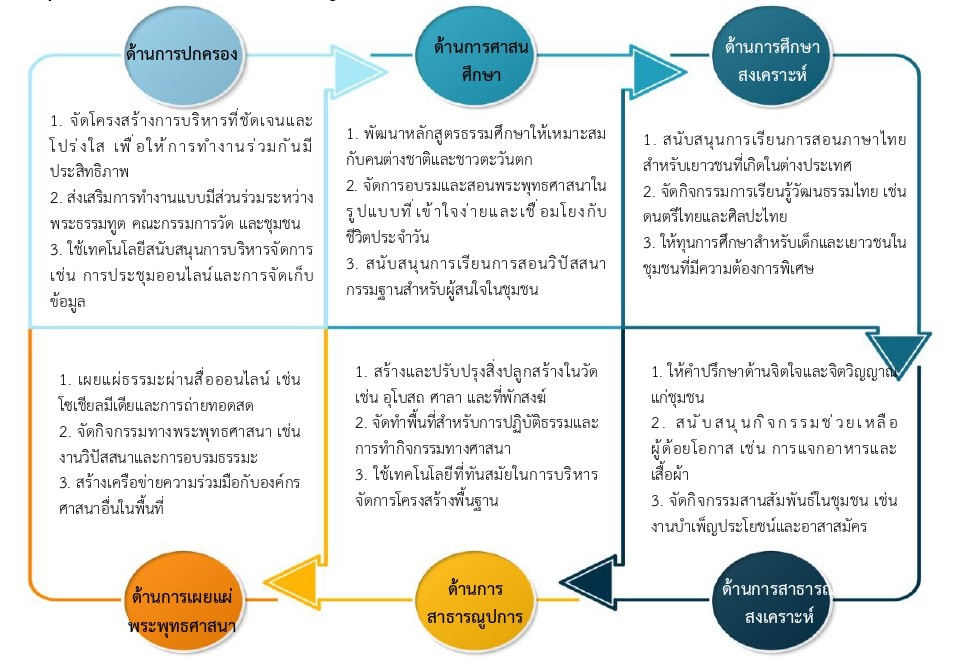
The results showed that: 1. General conditions in the development of monasteries had strength in the field of Dharma Ambassador personnel who have the knowledge and ability to spread the Dhamma. Monasteries Management and English Communication. There were budget support from Buddhists, both Thais and foreigners, transparent and efficient financial management, suitable, convenient transportation. and supported by the policies of the monastic community. 2. Elements of the monastery development included: 1. Dhamma Duta personnel were ready with specialized knowledge and skills. 2. Budget and resource management with a transparent and efficient system 3. Appropriate locations and infrastructure that reflected Thai cultural identity, 4. Materials, equipment and technology that supported the implementation of activities, and 5. Policies of the Sangha Order determining the direction of sustainable development. 3. The monastery development model was comprehensive in all dimensions, including: 1. Governance and management that emphasized transparency and participation, 2. Spreading Buddhism by applying the Dharma to the Western lifestyle and the use of digital media. 3. Education and welfare education that developed curriculum and learning activities, 4. Public utilities in infrastructure development, and 5. Public work through community assistance activities.
References
กรมการศาสนา. (2540). คู่มือพระสังฆาธิการว่าด้วยการคณะสงฆ์และการพระศาสนา. กรุงเทพฯ: โรงพิมพ์การศาสนา.
กองแผนงาน กรมการศาสนา กระทรวงศึกษาธิการ. (2542). คู่มือพระสังฆาธิการว่าด้วยพระราชบัญญัติ กฎ ระเบียบและคำสั่งของคณะสงฆ์. กรุงเทพฯ: โรงพิมพ์การศาสนา.
บัญชายุทธ นาคมุจลินท์. (2556). รูปแบบการพัฒนาศาสนาทายาทที่พึงประสงค์ในพระพุทธศาสนา (วิทยานิพนธ์พุทธศาสตรดุษฎีบัณฑิต สาขาวิชาพระพุทธศาสนา). มหาวิทยาลัยมหาจุฬาลงกรณราชวิทยาลัย.
พระครูนิวิฐศีลขันธ์ (ณรงค์ ฐิตวฑฺฒโน). (2557). รูปแบบการพัฒนาทุนมนุษย์ตามหลักพุทธธรรมในองค์กรปกครองส่วนท้องถิ่น (วิทยานิพนธ์พุทธศาสตรดุษฎีบัณฑิต สาขาวิชาการจัดการเชิงพุทธ). พระนครศรีอยุธยา: มหาวิทยาลัยมหาจุฬาลงกรณราชวิทยาลัย.
พระครูศรีรัตนธรรมวิเทศ (ปกานนท์ พิลาพันธ์). (2557). รูปแบบการบริหารจัดการสำนักปฏิบัติธรรมกัมมัฏฐานของผู้นำชาวพุทธในประเทศอังกฤษ (วิทยานิพนธ์พุทธศาสตรดุษฎีบัณฑิต สาขาวิชาการจัดการเชิงพุทธ). พระนครศรีอยุธยา: มหาวิทยาลัยมหาจุฬาลงกรณราชวิทยาลัย.
พระพุทธวรญาณ (ทองย้อย กิตฺติทินฺโน). (2548). ธรรมญาณนิพนธ์: 100 ปีพระพุทธวรญาณ (พิมพ์ครั้งที่ 2). กรุงเทพฯ: โรงพิมพ์มหาวิทยาลัยธรรมศาสตร์.
พระมหาอำนาจ ปวฑฺฒโน. (2557). การพัฒนารูปแบบการจัดการการศึกษาพระปริยัติธรรม (วิทยานิพนธ์พุทธศาสตรดุษฎีบัณฑิต สาขาวิชาการจัดการเชิงพุทธ). พระนครศรีอยุธยา: มหาวิทยาลัยมหาจุฬาลงกรณราชวิทยาลัย.
พระราชปริยัติ (สฤษดิ์ ประธาตุ). (2551). การพัฒนารูปแบบการบริหารงานวิชาการของมหาวิทยาลัยมหาจุฬาลงกรณราชวิทยาลัย (วิทยานิพนธ์พุทธศาสตรดุษฎีบัณฑิต สาขาวิชาพระพุทธศาสนา). พระนครศรีอยุธยา: มหาวิทยาลัยมหาจุฬาลงกรณราชวิทยาลัย.