A MODEL OF DHAMMADUTA BHIKKHU’S DISSEMINATION OF BUDDHISM: A CASE STUDY OF PHRA RAJAPROMMAYAN (LUANGPOR RUESILINGDAM)
Keywords:
Dissemination, Buddhism, Phra Rajaprommayan (Luangpor Ruesilingdam), ManomayiddhiAbstract
The objectives of this research paper were to: 1. Study the life and works of Phra Rajaprommayan; 2. To examine the patterns of Buddhism dissemination he employed; and 3. To study the effects of his dissemination, conducted by the qualitative research method collected data through in-depth interviews with 15 purposively selected key informants and analyzed data by content descriptive interpretation.
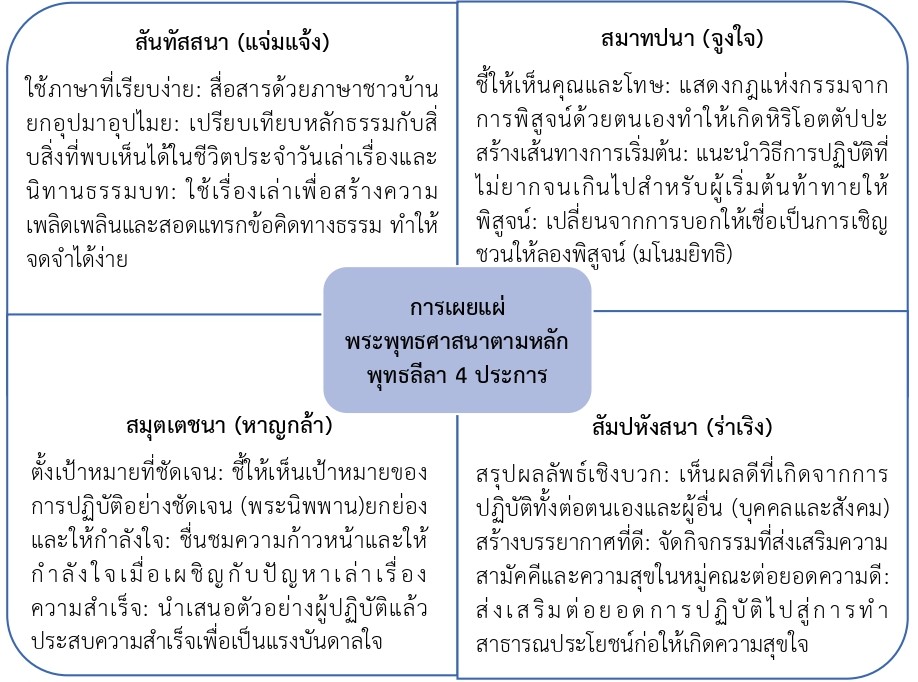
Findings were as follows: 1. Phra Rajaprommayan's life and work were profoundly interconnected, with dissemination serving as the central mission driving his six monastic duties. His teaching of practical meditation (Manomayiddhi), stemming from his direct experience, empowered individuals to personally verify the law of kamma, which served as a crucial foundation for building faith 2. His dissemination model was characterized by a shift from teaching belief to enabling proof through meditation practice. This was combined with clever communication in simple language, the use of Dhamma tactics like amulets and Buddhist art to engage the public, and the strategic use of contemporary technology like audio tapes and radio for widespread dissemination. 3. The effects of his dissemination were impactful on two levels. At the personal level, practitioners developed a firm belief in the law of kamma through direct experience, fostering moral integrity (hiri-ottappa) and integrating spiritual practice into daily life. At the societal level, it sparked a widespread meditation movement, creating a community of giving and reinforcing loyalty towards the nation's key institutions. The key knowledge gained was that sustainable dissemination depended on disseminators who were genuinely knowledgeable through practice and served as an exemplary role model, thereby building faith and credibility for Buddhism in today's world.
References
กรมพระยาดำรงราชานุภาพ, สมเด็จฯ. (2545). สมัยแรกพระพุทธศาสนาเป็นประธานของประเทศในสุวรรณภูมิอยู่ที่นี่ ที่แผ่นดินสยาม. กรุงเทพฯ: สำนักพิมพ์มติชน.
จินตวีร์ เกษมศุข. (2554). การสื่อสารกับการเปลี่ยนแปลงของสังคม. กรุงเทพฯ: สํานักพิมพ์แห่งจุฬาลงกรณ์มหาวิทยาลัย.
พระพรหมคุณาภรณ์ (ป. อ. ปยุตฺโต). (2564). พุทธวิธีในการสอน (พิมพ์ครั้งที่ 26). ม.ป.ท.
พระมหาศรีพยัคฆ์ สิริวิญฺญู (กงพาน). (2562). รูปแบบการเผยแผ่พระพุทธศาสนาของนักเผยแผ่ที่สอดคล้องกับสังคมไทย (ดุษฎีนิพนธ์ปรัชญาดุษฎีบัณฑิต สาขาวิชาการศึกษาและการพัฒนาสังคม). ชลบุรี: มหาวิทยาลัยบูรพา.
พระมหาสุเทพ สุวฑฺฒโน (เหลาทอง). (2561). กลยุทธ์การเผยแผ่พระพุทธศาสนาของพระธรรมทูตสายต่างประเทศ (ดุษฎีนิพนธ์พุทธศาสตรดุษฎีบัณฑิต สาขาวิชาพระพุทธศาสนา). พระนครศรีอยุธยา: มหาวิทยาลัยมหาจุฬาลงกรณราชวิทยาลัย.
พระราชธรรมนิเทศ (ระแบบ ฐิตญาโณ). (2540). พุทธวิธีเผยแผ่พระพุทธศาสนา. กรุงเทพฯ: โรงพิมพ์มหามกุฏราชวิทยาลัย.
พระราชพรหมยาน. (2554). มโนมยิทธิและประวัติของฉัน (พิมพ์ครั้งที่ 20). อุทัยธานี: วัดท่าซุง.
พระโสภณวชิรวาที (อาทิตย์ ซองดี). (2566). รูปแบบการเผยแผ่พระพุทธศาสนาตามหลักพุทธจิตวิทยาของพระพรหมบัณฑิต, ศ. ดร. (ประยูร ธมฺมจิตฺโต) (ดุษฎีนิพนธ์พุทธศาสตรดุษฎีบัณฑิต สาขาวิชาพุทธจิตวิทยา). พระนครศรีอยุธยา: มหาวิทยาลัยมหาจุฬาลงกรณราชวิทยาลัย.
มหาจุฬาลงกรณราชวิทยาลัย. (2539). พระไตรปิฎกฉบับภาษาไทย ฉบับมหาจุฬาลงกรณราชวิทยาลัย. กรุงเทพฯ: โรงพิมพ์มหาจุฬาลงกรณราชวิทยาลัย.
วัดจันทาราม (ท่าซุง). (2544). ประวัติหลวงพ่อพระราชพรหมยาน (หลวงพ่อวัดท่าซุง) (พิมพ์ครั้งที่ 3). อุทัยธานี: วัดท่าซุง.