BUDDHIST MANAGEMENT METHODS FOR SENIOR CITIZENS' WELL-BEING OF SANGHAS ADMINISTRATIVE IN TRAD PROVINCE
Keywords:
Buddhist Method, Well-Being, Elderly, Administrative MonksAbstract
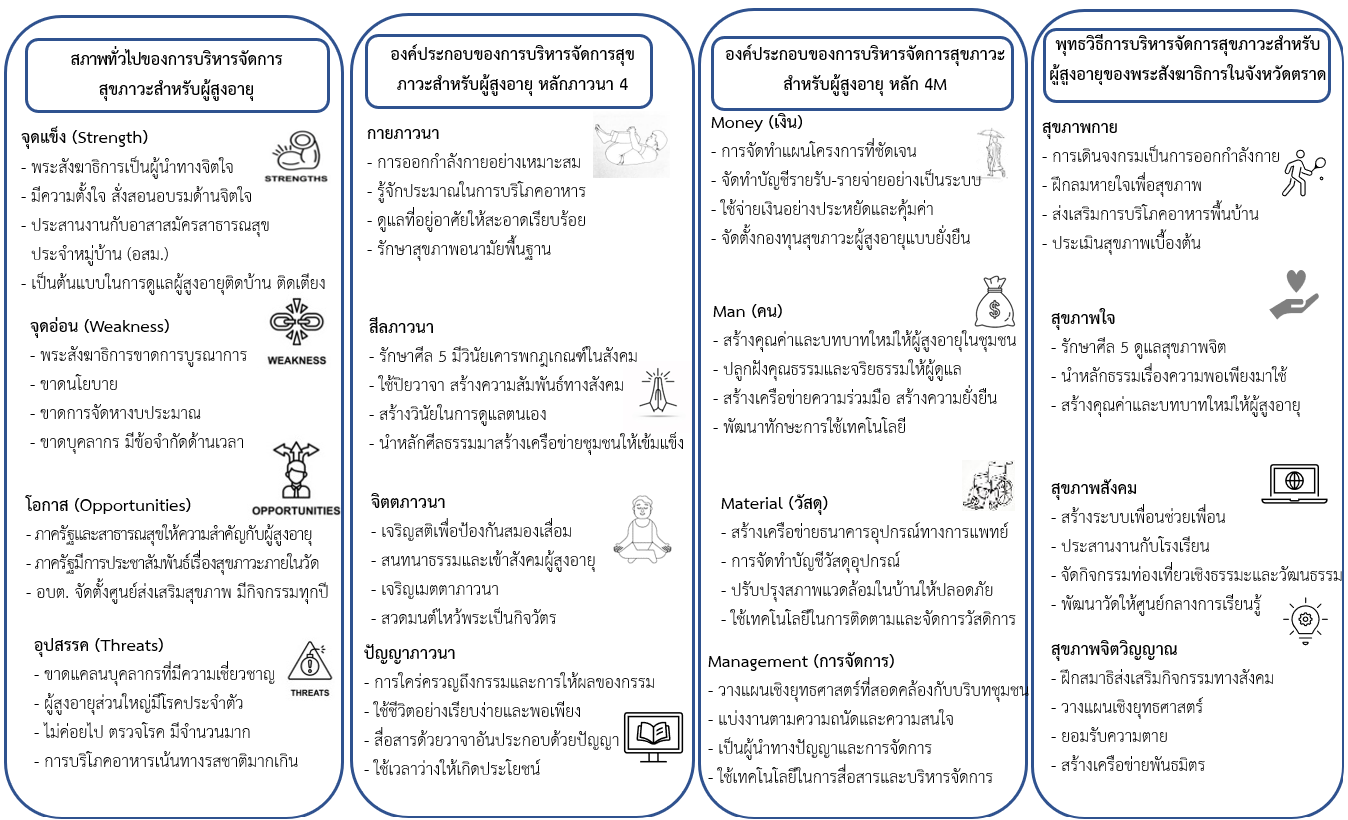
Objectives of this research article were: 1. To study the general conditions of senior citizens well-being management of senior citizens well-being management of administrative monks in Trat Province, 2. To study the components of senior citizens well-being management, and 3. To propose Buddhist methods for senior citizens well-being management of Administrative Monks in Trat Province. The research employed a qualitative research methodology. Data were collected through in-depth interviewing 25 key informants and 10 participants in focus group discussions. Data were analyzed using content analysis techniques in conjunction with contextual interpretation.
Findings revealed that: 1. The general conditions of senior citizens well-being management of administrative monks in Trat Province included both significant strengths and weaknesses. In terms of strengths, administrative monks served as spiritual leaders who helped build faith, belief, and respect in leadership roles. They demonstrated dedication and responsibility toward their duties. Regarding emotional aspects, they conducted Dhamma discussions, guided meditation practices, and coordinated with Village Health Volunteers (VHVs). The major weaknesses included the lack of integration between administrative monks and the public health sector, as well as the absence of policies for operating senior citizens clubs. 2. The components of health management for senior citizens of administrative monks in Trat Province consisted of: Kaya-bhavana, physical development, including appropriate and regular exercise and moderation in food consumption, Sila-bhavana, morality development including refraining from wasting time uselessly and observing the Five Precepts; Citta-bhavana, mental development including mindfulness practice to prevent dementia, Dhamma discussions, and social interaction among the senior citizens, and Pañña-bhavana, wisdom development including reflection on Kamma and its consequences, and living a simple and sufficient life. 3. The Buddhist methods for senior citizens’ well-being management of administrative monks in Trat Province included physical health through walking meditation as a form of Dhamma-based exercise and breathing practice for health and stress relief; mental health through observing the Five Precepts as the foundation of mental happiness, caring for caregivers’ mental health to prevent burnout, applying the principle of sufficiency in daily life, and using Brahmavihara 4 to build relationships within families and communities; and social health through encouraging the senior citizens to become transmitters of local wisdom, creating peer-support systems, and utilizing information technology for communication.
References
กรมกิจการผู้สูงอายุ. (2564). ผู้สูงอายุกับเรื่องสุขภาพจิต. สืบค้นเมื่อ 22 กรกฎาคม 2568 จาก https://www.dop.go.th/th/know/15/412.
_____. (2567). สถานการณ์ผู้สูงอายุไทย พ.ศ. 2566. กรุงเทพฯ: กรมกิจการผู้สูงอายุุ กระทรวงการพัฒนาสังคมและความมั่นคงของมนุษย์.
ประเวศ วะสี. (2560). พุทธธรรมกับสังคม. กรุงเทพฯ: สำนักพิมพ์หมอชาวบ้าน.
พระครูปริยัติกิตตยาภรณ์ (สุทัศน์ กิตฺตินาโม). (2561). รูปแบบการจัดการสุขภาวะแบบองค์รวมสำหรับผู้สูงอายุของพระสงฆ์จังหวัดตราด (ดุษฎีนิพนธ์ปริญญาพุทธศาสตรดุษฎีบัณฑิต สาขาวิชาการจัดการเชิงพุทธ). พระนครศรีอยุธยา: มหาวิทยาลัยมหาจุฬาลงกรณราชวิทยาลัย.
พระครูปลัดเสนาะ วิสุทฺโธ (เขาเขียว). (2567). รูปแบบการมีส่วนร่วมในการพัฒนาคุณภาพชีวิตประชาชนตามหลักพุทธธรรมของคณะสงฆ์จังหวัดพระนครศรีอยุธยา (ดุษฎีนิพนธ์ปริญญาพุทธศาสตรดุษฎีบัณฑิต สาขาวิชาการจัดการเชิงพุทธ). พระนครศรีอยุธยา: มหาวิทยาลัยมหาจุฬาลงกรณราชวิทยาลัย.
พระครูพิสณฑ์สิทธิการ (อรุณ ธมฺมวโร). (2562). กระบวนการเสริมสร้างสุขภาวะพลังบวกของผู้สูงอายุตามแนวพุทธจิตวิทยา (ดุษฎีนิพนธ์ปริญญาพุทธศาสตรดุษฎีบัณฑิต สาขาวิชาพุทธจิตวิทยา). พระนครศรีอยุธยา: มหาวิทยาลัยมหาจุฬาลงกรณราชวิทยาลัย.
พระครูภาวนาคุณาภรณ์ (ทรงศักดิ์ กิตฺติธโร). (2564). รูปแบบการบริหารจัดการวัดที่เป็นสำนักปฏิบัติธรรมในจังหวัดสระบุรี (ดุษฎีนิพนธ์ปริญญาพุทธศาสตรดุษฎีบัณฑิต สาขาวิชาการจัดการเชิงพุทธ). พระนครศรีอยุธยา: มหาวิทยาลัยมหาจุฬาลงกรณราชวิทยาลัย.
พระครูวิบูลเจยาภิรม (ทวี มีสุข). (2562). กระบวนการเตรียมความพร้อมของวัดในการส่งเสริมสุขภาวะผู้สูงอายุจังหวัดนครปฐม. วารสารมหาจุฬาวิชาการ, 6(ฉบับพิเศษ), 382–394.
พระครูสังฆรักษ์สมพงษ์ จตฺตมโล (เลามะ). (2567). รูปแบบการจัดการสุขภาวะของพระสงฆ์ตามธรรมนูญสุขภาพพระสงฆ์แห่งชาติในจังหวัดอ่างทอง (ดุษฎีนิพนธ์ปริญญาพุทธศาสตรดุษฎีบัณฑิต สาขาวิชาการจัดการเชิงพุทธ). พระนครศรีอยุธยา: มหาวิทยาลัยมหาจุฬาลงกรณราชวิทยาลัย.
พระมหากิตติกร กิตฺติรกฺโข (อุดมเดชาพัฒน์). (2565). การพัฒนาแหล่งท่องเที่ยวเชิงวัฒนธรรมของวัดในจังหวัดนนทบุรี (ดุษฎีนิพนธ์ปริญญาพุทธศาสตรดุษฎีบัณฑิต สาขาวิชาการจัดการเชิงพุทธ) พระนครศรีอยุธยา: มหาวิทยาลัยมหาจุฬาลงกรณราชวิทยาลัย.
พระสมุห์ธงชัย สุนฺทราจาโร. (2567). รูปแบบการขับเคลื่อนสุขภาวะพระสงฆ์ในสถานการณ์โควิด-19 ในจังหวัดนครราชสีมา. วารสารมณีเชษฐาราม, 7(3), 342–357.
พระสมุห์แมนรัตน์ จตฺตมโล (พิทักษ์ทรัพย์). (2567). รูปแบบการบริหารจัดการที่ดีของหน่วยอบรมประชาชนประจำตำบลในจังหวัดสมุทรสงคราม (ดุษฎีนิพนธ์ปริญญาพุทธศาสตรดุษฎีบัณฑิต สาขาวิชาการจัดการเชิงพุทธ). พระนครศรีอยุธยา: มหาวิทยาลัยมหาจุฬาลงกรณราชวิทยาลัย.
พระสมุห์วศิน วิสุทฺโธ (พงษ์ศักดิ์). (2564). รูปแบบการส่งเสริมสุขภาวะประชาชนกลุ่มชาติพันธุ์ของพระสงฆ์ ในจังหวัดราชบุรี (ดุษฎีนิพนธ์ปริญญาพุทธศาสตรดุษฎีบัณฑิต สาขาวิชาการจัดการเชิงพุทธ). พระนครศรีอยุธยา: มหาวิทยาลัยมหาจุฬาลงกรณราชวิทยาลัย.
พวงชมนาถ จริยะจินดา. (2561). รูปแบบสมการโครงสร้างการดูแลผู้สูงอายุโดยครอบครัวตามหลักพุทธจิตวิทยา (ดุษฎีนิพนธ์ปริญญาพุทธศาสตรดุษฎีบัณฑิต สาขาวิชาพุทธจิตวิทยา). พระนครศรีอยุธยา: มหาวิทยาลัยมหาจุฬาลงกรณราชวิทยาลัย.
มหาจุฬาลงกรณราชวิทยาลัย. (2539). พระไตรปิฎกฉบับภาษาไทย ฉบับมหาจุฬาลงกรณราชวิทยาลัย. กรุงเทพฯ: โรงพิมพ์มหาจุฬาลงกรณราชวิทยาลัย.
วรรณภา นันทกาวงศ์. (2566). รูปแบบพุทธจิตวิทยาในการสร้างเสริมสุขภาวะองค์รวมของผู้สูงวัยในจังหวัดปทุมธานี (ดุษฎีนิพนธ์ปริญญาพุทธศาสตรดุษฎีบัณฑิต สาขาวิชาพุทธจิตวิทยา). พระนครศรีอยุธยา: มหาวิทยาลัยมหาจุฬาลงกรณราชวิทยาลัย.
วลัยพรรณ เฉลยทรัพย์. (2560). รูปแบบการสร้างแรงจูงใจให้เยาวชนพัฒนาคุณธรรมจริยธรรมโดยอาศัยศิลปินต้นแบบ (ดุษฎีนิพนธ์ปริญญาพุทธศาสตรดุษฎีบัณฑิต สาขาวิชาพุทธจิตวิทยา). พระนครศรีอยุธยา: มหาวิทยาลัยมหาจุฬาลงกรณราชวิทยาลัย.
สำนักงานพัฒนาสังคมและความมั่นคงของมนุษย์จังหวัดตราด. (2566). รายงานสถานการณ์จังหวัดตราด. ตราด: สำนักงานพัฒนาสังคมและความมั่นคงของมนุษย์จังหวัดตราด.