STRENGTHENING PUBLIC POLITICAL TRUST IN LOCAL POLITICIANS IN A DEMOCRATIC SYSTEM
Keywords:
Strengthening, Political Trust, Politicians, DemocracyAbstract
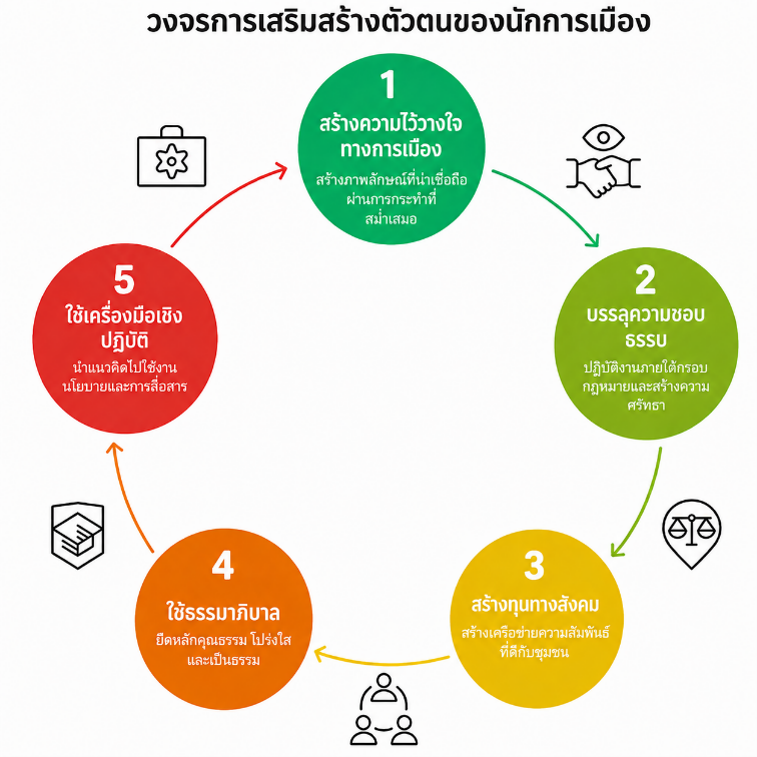
Objectives of this academic article were to examine conceptual frameworks and theories related to political trust and to propose guidelines for strengthening citizens’ trust in politicians within a democratic system, based on an analysis of key academic literature and documents. Political trust refers to the level of confidence that citizens have in the government, political leaders, and the bureaucracy in terms of integrity, effectiveness, transparency, and fairness. It constitutes an institutional asset that is crucial to the stability and sustainability of democracy. Factors influencing political trust include: 1. the quality and effectiveness of public policies; 2. the performance and efficiency of public organizations and administrative teams; 3. open and interactive political communication; 4. the personality and leadership of politicians; and 5. the level of social capital and public participation. Strengthening political trust requires an integrated process, beginning with the establishment of legitimacy through the rule of law, transparency, and robust accountability mechanisms. This must be accompanied by the formulation and implementation of public policies that concretely address citizens’ problems and needs. Political leaders must demonstrate credibility, ethical conduct, and consistent, sincere communication in order to foster mutual understanding and reduce perceptual gaps. At the same time, the state must provide spaces for citizen participation in shaping policy directions, thereby cultivating a shared sense of ownership and accumulating social capital.
References
กรมพัฒนาฝีมือแรงงาน. (2558). หลักธรรมาภิบาล. สืบค้นเมื่อ 4 มีนาคม 2569 จาก https://shorturl.asia/LMk3Q.
กฤษณ์สัมพันธ์ เมนะสูต. (2559). กรอบนโยบายสาธารณะที่ดี ที่พรรคการเมืองควรนำไปใช้ในยุคปฏิรูป. สืบค้นเมื่อ 4 มีนาคม 2569 จาก https://www.matichon.co.th/columnists/news_310799.
กษิต ภิรมย์. (2566). นักการเมืองคือใคร? และควรทำอะไร?. สืบค้นเมื่อ 26 กุมภาพันธ์ 2569 จาก https://www.naewna.com/politic/columnist/54128.
เกษรศิริ อรุณชัยพร. (2559). ทุนทางสังคม. วารสารวิทยาลัยสงฆ์นครลำปาง, 5(2), 1–8.
โกวิทย์ พวงงาม. (2554). การปกครองท้องถิ่นไทย (พิมพ์ครั้งที่ 7). กรุงเทพฯ: เอ็กซเปอร์เน็ท.
ชลลดา ทวีคูณ. (2556). เทคนิคการพัฒนาบุคลิกภาพ. กรุงเทพฯ: โอเดียนสโตร.
ชาญชัย อาจินสมาจาร. (2544). การบริหารการศึกษา. กรุงเทพฯ: ศูนย์สื่อเสริมกรุงเทพ.
ต้นโมกข์. (2557). ความชอบธรรม : ทฤษฎีทั่วไป และความชอบธรรมในรัฐไทย ตอนที่ 4. สืบค้นเมื่อ 4 มีนาคม 2569 จาก https://www.gotoknow.org/posts/568976.
นิภา ทัตตานนท์. (2567). ความไว้วางใจทางการเมืองของประชาชนที่มีต่อนักการเมืองท้องถิ่น. วารสารวิชาการสังคมศาสตร์สมัยใหม่ (Online), 1(4), 13–24.
ปริญ บุญฉลวย. (2556). วัฒนธรรมองค์การ องค์การการเรียนรู้กับประสิทธิผลองค์การของศาลยุติธรรม: ตัวแบบสมการโครงสร้าง (ดุษฎีนิพนธ์ปรัชญาดุษฎีบัณฑิต สาขาวิชาพัฒนาสังคมและการจัดการสิ่งแวดล้อม). กรุงเทพฯ: สถาบันบัณฑิตพัฒนาบริหารศาสตร์.
ปาริชาติ ชุมพงศ์ และคณะ. (2568). การสื่อสารของนักการเมืองท้องถิ่นที่มีผลต่อการบริหารงานขององค์กรปกครองส่วนท้องถิ่นในจังหวัดนครศรีธรรมราช. วารสารวิชาการรัฐศาสตร์และรัฐประศาสนศาสตร์, 7(4), 74–87.
พระมหาธนวัฒน์ ปริยตฺติเมธี และคณะ. (2568). การประยุกต์หลักพุทธธรรมเพื่อส่งเสริมความไว้วางใจทางการเมืองของประชาชนที่มีต่อพรรคการเมืองในจังหวัดเลย. วารสารวิชาการรัฐศาสตร์และรัฐประศาสนศาสตร์, 7(4), 17–32.
วุฒิสาร ตันไชย. (2546). การกระจายอำนาจสู่องค์กรปกครองส่วนท้องถิ่น. นนทบุรี: สถาบันพระปกเกล้า.
สำนักงานคณะกรรมการข้าราชการพลเรือน. (2550). คู่มือแนวทางการสร้างมาตรฐานความโปร่งใสของส่วนราชการ. นนทบุรี: สำนักงานคณะกรรมการข้าราชการพลเรือน.
อภิชัย พิทยานุรักษกุล และคณะ. (2567). การประยุกต์หลักพุทธธรรมเพื่อส่งเสริมความไว้วางใจของประชาชนที่มีผลต่อการออกเสียงลงคะแนนเลือกตั้งนายกเทศมนตรีในจังหวัดชลบุรี. วารสารสหวิทยาการนวัตกรรมปริทรรศน์, 7(4), 379–390.
Adam, F. & Roncevic, B. (2003). Social Capital: Recent Debates and Research Trends. Social Science Information, 42, 155–183.
Coleman, J. S. (1998). Social Capital in the Creation of Human Capital. American Journal of Sociology, 94, S95–S120.
McNair, B. (2003). An Introduction to Political Communication (2nd ed.). New York: Routledge.
Woodcock, M. (1989). Team Development Manual. Great Britain: Billing & Son.
Woolcock, M. & Narayan, D. (1999). Social Capital: Implications for Development Theory, Research, and Policy. The World Bank Research Observer, 15(2), 225–249.