
China–Taiwan Tensions and the Transformation of Power Structure in East Asia
Article Sidebar
Main Article Content
Abstract
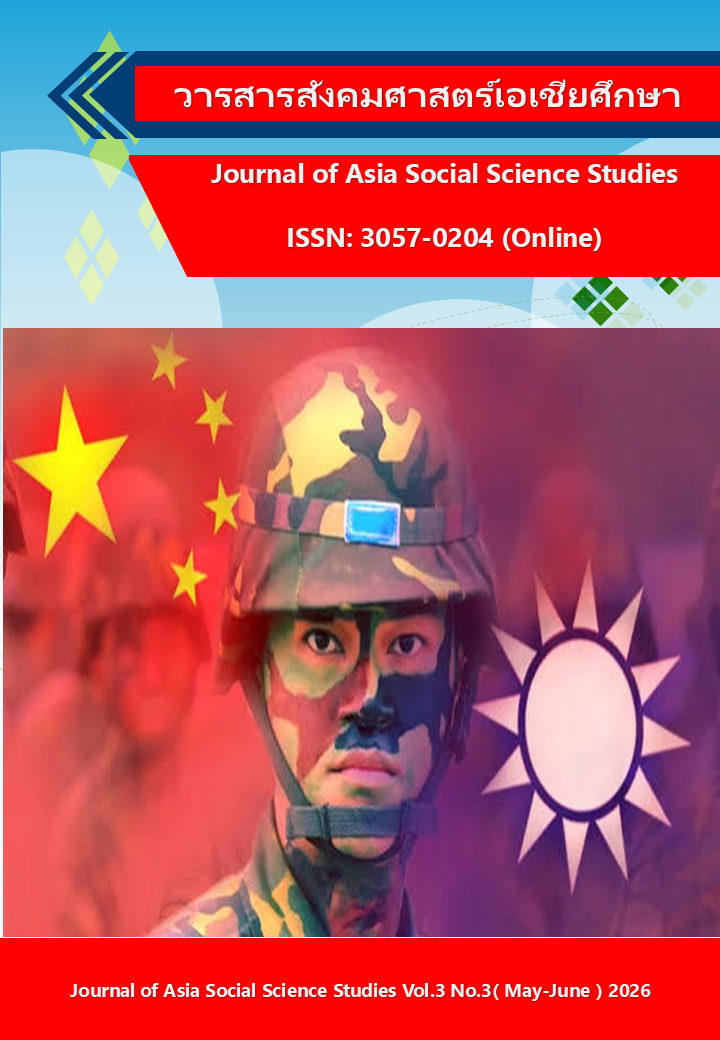
This article examines cross-strait tensions between China and Taiwan as a contemporary socio-political and geopolitical phenomenon. Rather than limiting the analysis to military or security dimensions, the article adopts an interdisciplinary social science perspective that emphasizes national identity, democracy, domestic politics, and the role of regional and global actors. It argues that the China–Taiwan conflict is not merely a dispute over sovereignty but a confrontation between two competing visions of world order: China’s state-centered authoritarian model and Taiwan’s democratic model, which has become symbolically significant in East Asia.
The first part of the article outlines the historical background and power structures shaping cross-strait relations, highlighting the strategic role of major powers—particularly the United States—in transforming the Taiwan Strait into a key geopolitical hotspot. The second part focuses on Taiwan’s domestic politics, analyzing how national identity formation, democratic consolidation, and survival strategies are deeply intertwined under persistent pressure from China.
Special attention is given to Taiwan’s use of informal diplomacy and soft power, including its strengths in semiconductor technology, cultural influence, and democratic values. These tools have enabled Taiwan to enhance its international presence despite limited formal diplomatic recognition. The article further conceptualizes Taiwan as a “middle power–like actor” that strategically employs flexibility, norms, and transnational networks to preserve its political space within an asymmetrical power structure. In conclusion, the article argues that China–Taiwan tensions reflect broader transformations in the global order and have far-reaching implications for stability in the Asia-Pacific region. For middle and small states such as Thailand, the situation underscores the need for balanced strategic thinking that integrates economic interests, security concerns, and international norms in an era of intensifying great power competition.
Article Details

This work is licensed under a Creative Commons Attribution-NonCommercial-NoDerivatives 4.0 International License.
