An analysis on the equanimity (Upekkhã) for the development of wisdom leading to the liberation in Buddhism
Article Sidebar
Main Article Content
Abstract
This research article has two objectives: (1) to study equanimity (Upekkhã) in Theravada Buddhism. and 2) to analyze equanimity as a means for developing wisdom leading to liberation in Buddhism. This research employs documentary research methodology through studying the Tipiṭaka. Buddhist academic documents. and related research works and then the findings are made through analytical description.
The research findings reveal that Upekkhã means “equanimity” or “non-attachment” in the context of maintaining a stable neutral mind. Upekkhã does not signify indifference or apathy. but rather a steadfast mind that remains unshaken by arising feelings or emotions such as love. anger. or suffering. It is a virtue that prevents individuals from being dominated by attachment or bias. Upekkhã manifests as mental neutrality in various dimensions. such as equanimity towards sensory impressions from the sense bases (Chaḷaṅgupekkhã) and equanimity towards beings based on the law of Kamma (Brahmavihãrupekkhã). These forms of equanimity help maintain mental tranquility and enable one to live mindfully and wisely in all situations.
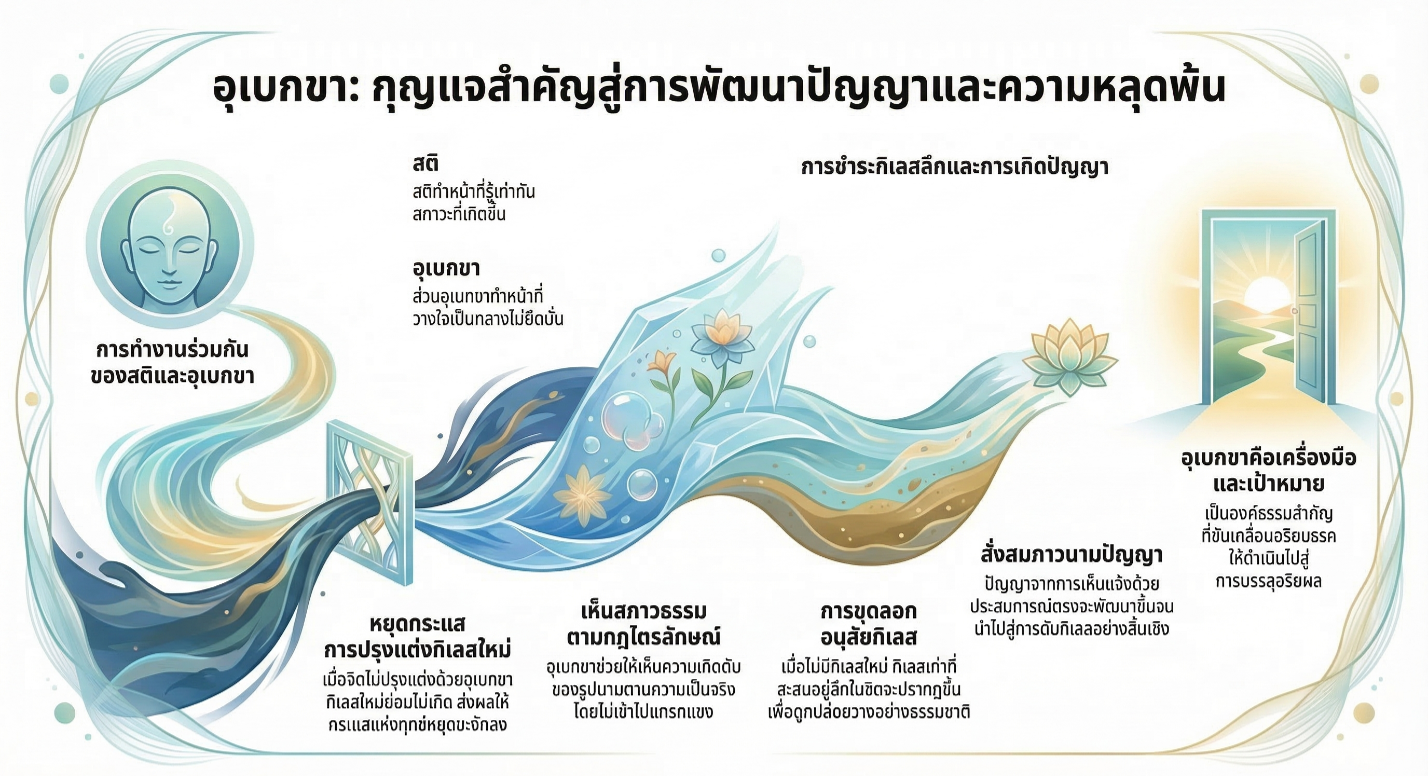
The results gained from the analysis showed that in Buddhism Upekkhã by nature consists in wisdom where mindfulness on the various conditioned things. be they body or mind. can be perfectly realized and stabilized without any bias. likeness. hatred. non-hatred. agreement or disagreement. Under this situations. one’s mind is not dominated or intervened by greed. hatred. and delusion. Consequently. such mind becomes completely liberated from all defilements as wisdom sees all. be they conditioned or un-conditioned things. as the common aspects; one it arises. then it ceases. it is not subject to any force of anyone (impermanence. suffering. selfless). This understanding leads to the destruction of lust. repulsion. and latent dispositions that reside in one’s subconsciousness bringing about freedom from all kinds of plight respectively. The analysis led to the development of a new body of knowledge, namely the Upekkhā Model for the Cultivation of Wisdom toward Liberation in Buddhism.
Article Details

This work is licensed under a Creative Commons Attribution-NonCommercial-NoDerivatives 4.0 International License.
References
พระธรรมปิฎก (ป.อ. ปยุตฺโต). ธรรมกับการพัฒนาชีวิต. กรุงเทพมหานคร: มหาวิทยาลัยมหาจุฬาลงกรณราชวิทยาลัย, 2546.
พระพรหมคุณาภรณ์ (ป.อ. ปยุตฺโต). พจนานุกรมพุทธศาสตร์ ฉบับประมวลธรรม. กรุงเทพมหานคร: มหาวิทยาลัยมหาจุฬาลงกรณราชวิทยาลัย, 2559.
พระมหาปริญญา วรญาโณ. “การวิเคราะห์การบรรเทาภัยพิบัติด้วยรัตนสูตร”. วารสารเสฏฐวิทย์ปริทัศน์. ปีที่ 1 ฉบับที่ 3 (กันยายน–ธันวาคม 2564): 47–60.
พระอาจารย์มหาบัว ญาณสัมปันโน. วิธีปฏิบัติวิปัสสนากรรมฐาน. อุดรธานี: วัดป่าบ้านตาด, 2550.
รชฎา เชียงกูล. “อุเบกขาในการเจริญภาวนากรรมฐานกับความสำเร็จในทางโลก”. วารสารพุทธจิตวิทยา. ปีที่ 8 ฉบับที่ 1 (มกราคม–เมษายน 2566): 144–156.
วันชัย เมธาอภินันท์. “วิธีการแก้ไขความขัดแย้งในสังคมไทยปัจจุบันตามแนวพระพุทธศาสนา”. Journal of Applied Education. ปีที่ 1 ฉบับที่ 1 (มกราคม–เมษายน 2566): 56–67.
สมเด็จพระพุทธโฆษาจารย์ (ป.อ. ปยุตฺโต). อมฤตพจนา พุทธศาสนสุภาษิต. พิมพ์ครั้งที่ 33. กรุงเทพมหานคร: มูลนิธิธรรมทานกุศลจิตและพิพิธภัณฑ์จรรโลงพุทธศาสนา, 2566.
อัศวิน ฉิมตะวัน และรวิช ตาแก้ว. “การวางใจเป็นกลางกับปรัชญากระบวนทรรศน์”. วารสารวิจัยธรรมศึกษา. ปีที่ 6 ฉบับที่ 2 (กรกฎาคม–ธันวาคม 2566): 233–246.
Hart, William. The Art of Living: Vipassana Meditation as Taught by S. N. Goenka. New York: HarperCollins Publishers, 1987.
