
SOUTHEAST ASIAN EXPRESSIVE TRADITIONS: THEORIES, CONCEPTS, INNOVATIONS AND CONVERGENCES
Article Sidebar
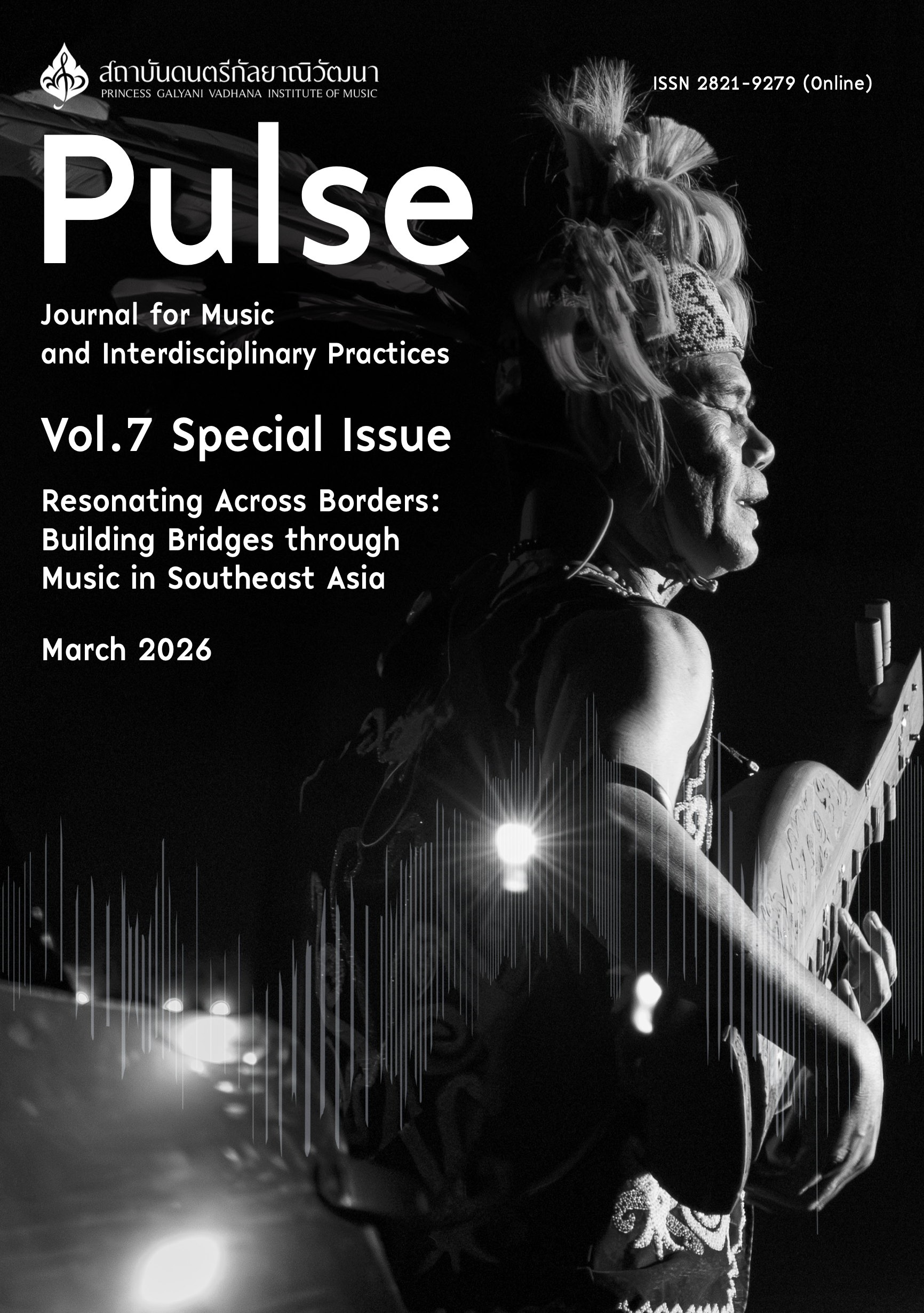
Main Article Content
Abstract
A discussion of the theoretical and conceptual constructs which would include the linguistic and aesthetic distinctions, as well as changes, innovations, and convergences in pedagogy and practice.
Asia is a region that is made up of societies which possess their uniqueness in terms of cultures, sense of spirituality, and philosophy. In the throes of the colonial era, Asia has become an even more vigorous and dynamic region in the world. Nation-states have emerged, as colonial powers began to relinquish their hold from their possessions. From a wider historical perspective, the waning of the colonial age which had brought European civilisation to bear on peoples outside its geographic boundaries is setting a new scenario where new roles and strengths are being assumed or exchanged in the larger sphere of engagement between the world’s cultures as well as in local national arenas of cultural politics.
What makes the times now more challenging is the fact that while progress and modernity are upon us, we are at the same time faced with the challenges of reconstructing what may have been lost or what might have been eroded through time of disuse, omission, or neglect, or what may have emerged through the long process of acculturation and assimilation. And even as we try to unravel this cultural dispersion and diaspora, dichotomies that emerged several decades ago are no longer clear-cut and ideologically untenable. Issues of cultural duality such as authenticity and change, acculturation and enculturation, preservation and modernization, indigenous and contemporary, classical and popular, the superordinate and subordinate cultures, emic–etic and insider–outsider, are becoming mere references to new structural profiles within the larger framework of cultural evolution. Thus, there is a need to know what symbols, meaning, form, and text are inherently Southeast Asian, their cultural values, and their relevance to contemporary life.
In the national agendas of Southeast Asian nations today, one can find ethnicity as a source of strength rather than weakness, in that pre-colonial ethnic traditions are repositories of insights, notions, and humanistic valuation of things. Part of this general consideration is the fact that it is also in ethnicity that spirituality is concretised not only in belief systems relative to the metaphysical world, but also in the application of such ideation and philosophical thought in dealing with the materiality of human existence. In the field of the traditional arts, such ethnicities have been redefined as styles, some delegated as “national” and others relegated as “regional” or “local”, and other categories based on modern academic hierarchical taxonomy. More specifically, ethnicity is even more dramatically manifested in the expressive traditions in which all of the above-mentioned notions of spirituality, philosophical constructs, sense of equilibrium, and aesthetic judgement are finely delineated in their exercise and practice.
In Southeast Asia, traditional expressive practices are a concrete manifestation of the dynamics of culture and the changes that occur in society from the point of view of history, politics, economy, and religion. Partly because of their highly functional role in the most important facets of community life, the various repertoires such as epics, ballads, lullabies, poetic discourses and debates, occupational songs, life cycle music-making, as well as all the ceremonies, theatres, and popular performances, all serve as mirrors to a deeper understanding of societies in terms of their biocultural evolution, social history, language, social organisation, healing practices, and even technological knowledge vis-à-vis their metaphysical and spiritual worldview.
In the context of the social functionality of these performances, the individuality of the performers becomes subsumed into the entire communal act. A concept of collectivity in both musical and other expressive traditions provides the focal reference in the realisation of these modes of production. But more than what is literally heard and seen in the course of these performative expressions, the ultimate message resides in the principle of balance between nature, man, the spiritual dimension, and the act of production.
Article Details

This work is licensed under a Creative Commons Attribution-NonCommercial-NoDerivatives 4.0 International License.
