
SOUNDBRIDGE FESTIVAL: FIELDWORK, PEDAGOGY, AND CROSS-CULTURAL ARTISTIC DIALOGUES IN SOUTHEAST ASIA
Article Sidebar
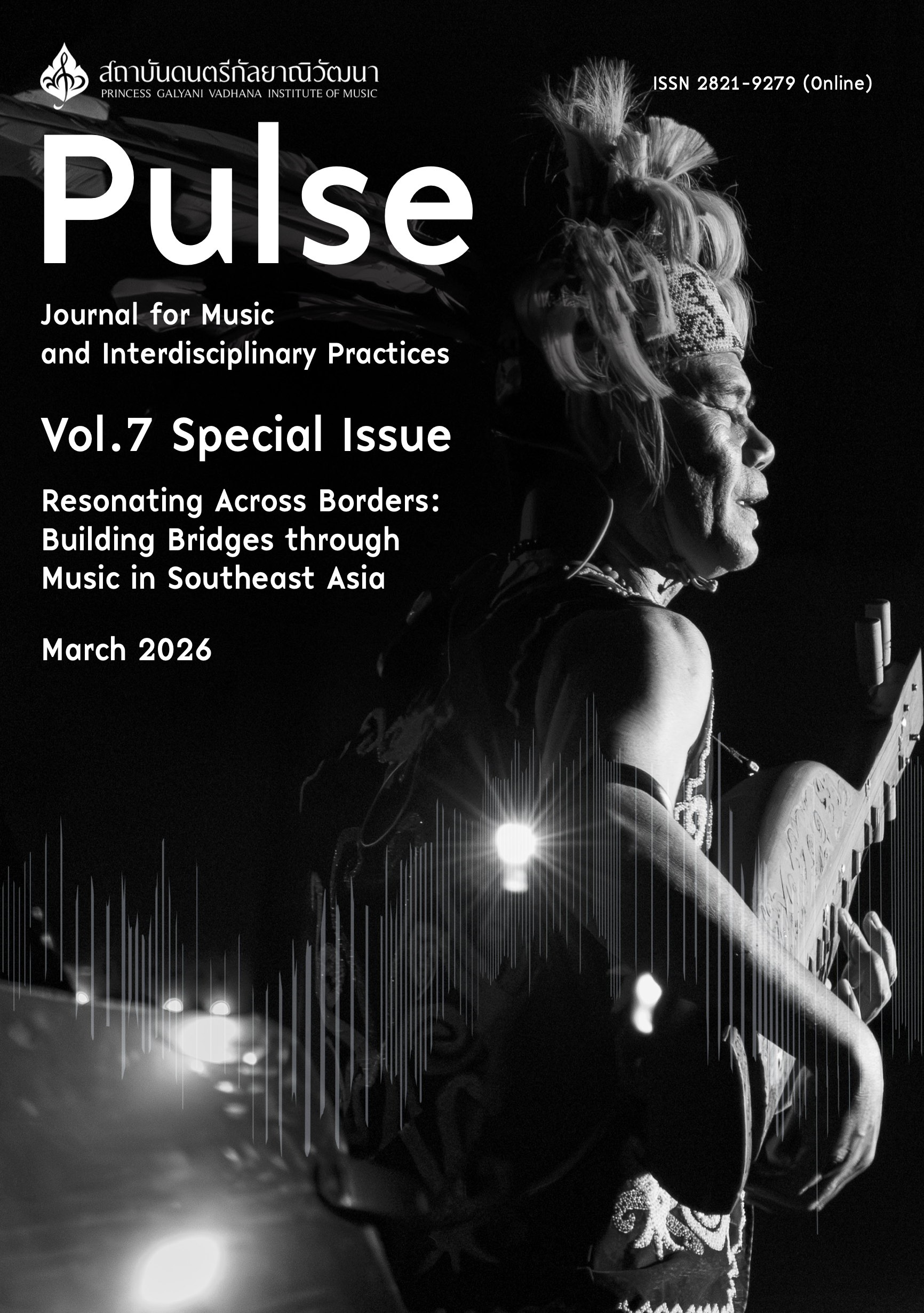
Main Article Content
Abstract
Founded in Malaysia in 2013, the SoundBridge Music Festival is an independent, artist-led platform dedicated to contemporary music, interdisciplinary collaboration, and cross-cultural dialogue in Southeast Asia. Established with the support of the Society of Malaysian Contemporary Composers (SMCC) and co-founded with the authorís independent initiative, Studio C , SoundBridge emerged outside institutional frameworks as a response to structural limitations in funding, pedagogy, and audience development.
Rather than functioning solely as a performance-based event, SoundBridge has evolved over seven editions (2013ñ2025) into a sustained pedagogical and cultural initiative integrating artistic creation, education, and fieldwork. Drawing on the authorís dual role as composer, educator, and artistic director, this article examines SoundBridge as a practice-based model that foregrounds experiential learning, interdisciplinary collaboration, and regional artistic exchange. Particular attention is given to the festivalís fieldwork programmes in Indonesia and Malaysian Borneo, situated in dialogue with Southeast Asian pedagogical traditions, notably the legacy of JosÈ Maceda.
Through workshops, lecture concerts, cross-media performances, and immersive on-site experiences, the festival functions as a ìbridgeî between artists, students, traditions, and contemporary practices. In doing so, it offers an alternative framework for contemporary music education and cross-cultural artistic dialogue, contributing to the sustainable development of artistic ecosystems in Malaysia and the wider Asian region.
As this study draws in part on reflections from participating artists and students across multiple editions of the festival, some contributors are presented anonymously. This approach reflects the informal, process-oriented nature of many interactions within the festival context, where discussions often occur outside formal interview settings. Anonymity is therefore maintained where appropriate to respect the conversational and practice-based conditions under which these insights emerged.
Article Details

This work is licensed under a Creative Commons Attribution-NonCommercial-NoDerivatives 4.0 International License.
