Hybrid Robotics Classroom: A Conceptual Framework for Advancing Robotics Competency in Thai Schools
Article Sidebar
Main Article Content
Abstract
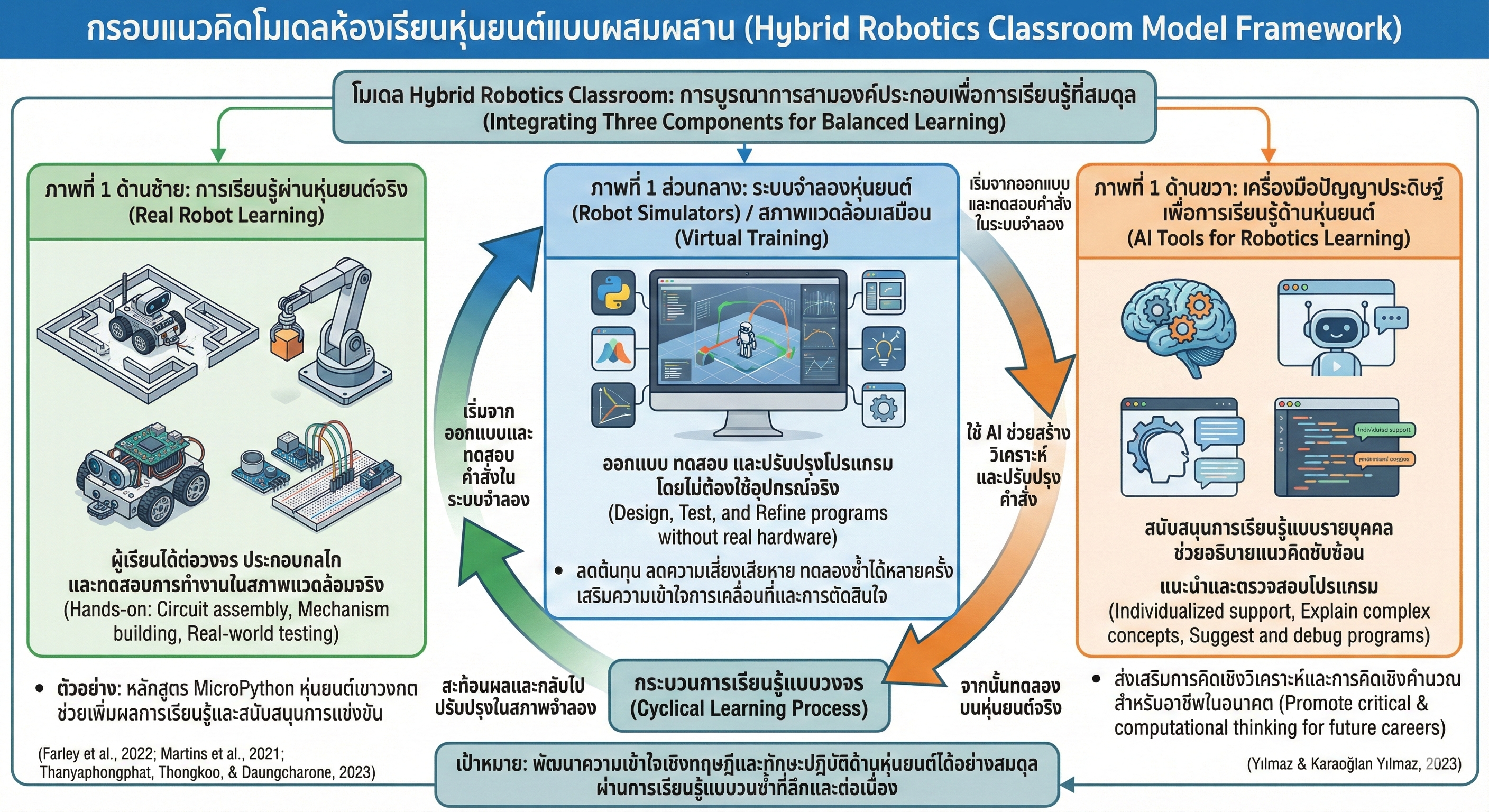
This article proposes the “Hybrid Robotics Classroom” as an integrated learning model that combines Physical Robotics, Robotics Simulators, and AI Tools for Robotics Learning to leverage robotics education in Thailand under the digital era. Despite Thailand has made continuous progress in promoting technology education for students, significant challenges persist including resource disparities, high equipment costs, time constraints in hands-on practice and limited teacher readiness. The proposed model aims to mitigate these gaps by offering flexible, scalable, and accessible learning pathways that strengthen students’ logical thinking, problem-solving abilities, and future career competencies in robotics and AI. In addition, the article synthesizes knowledge from both domestic and international research, highlights key educational benefits, presents illustrative case studies, and offers policy recommendations. Together, these elements contribute to proposing a new approach for developing robotics classrooms that are effective, accessible, and aligned with the learning needs of the 21st century to foster sustainable student development in line with future technological changes
