Development of a C-MIAP Instructional Strategy Integrated with Generative Artificial Intelligence to Enhance Learning in Fundamentals of Control Systems for Higher Education Students
Article Sidebar
Main Article Content
Abstract
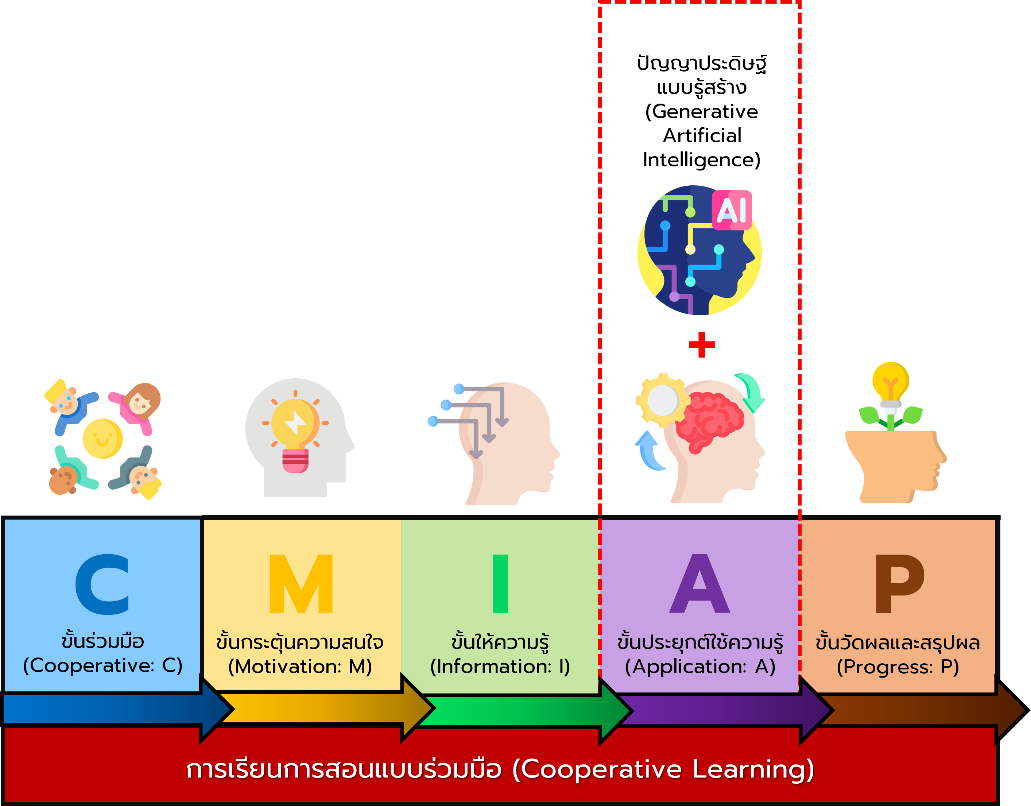
This research aimed to: 1) develop a C-MIAP instructional strategy integrated with Generative Artificial Intelligence (GenAI) to enhance learning in the Fundamentals of Control Systems; 2) examine learning progress; 3) compare academic achievement; and 4) investigate students' technology acceptance. The participants consisted of 19 second-year undergraduate students in Industrial Education at Nakhon Pathom Rajabhat University, enrolled in the "Electrical Work in Industrial Control for Industrial Education" course. The sample was selected using purposive sampling. The research instruments included lesson plans utilizing the C-MIAP strategy with GenAI, a pre-test and post-test academic achievement test, and a GenAI technology acceptance questionnaire. Data were analyzed using mean ( ), standard deviation (S.D.), normalized gain, and the Wilcoxon Signed Rank Test.The results indicated that: 1) The developed instructional strategy comprised five steps: Cooperative (C), Motivation (M), Information (I), Application (A), and Progress (P); 2) The students' overall learning progress was at a high level (Normalized Gain = 0.74); 3) Post-test academic achievement was significantly higher than pre-test achievement at the .001 level; and 4) The students reported a high level of acceptance regarding the use of Generative AI technology.
