Effects of AI DeepSeek-Assisted Games on Chinese Vocabulary Learning Achievement and Post-Use Motivation among Lower Secondary Students
Article Sidebar
Main Article Content
Abstract
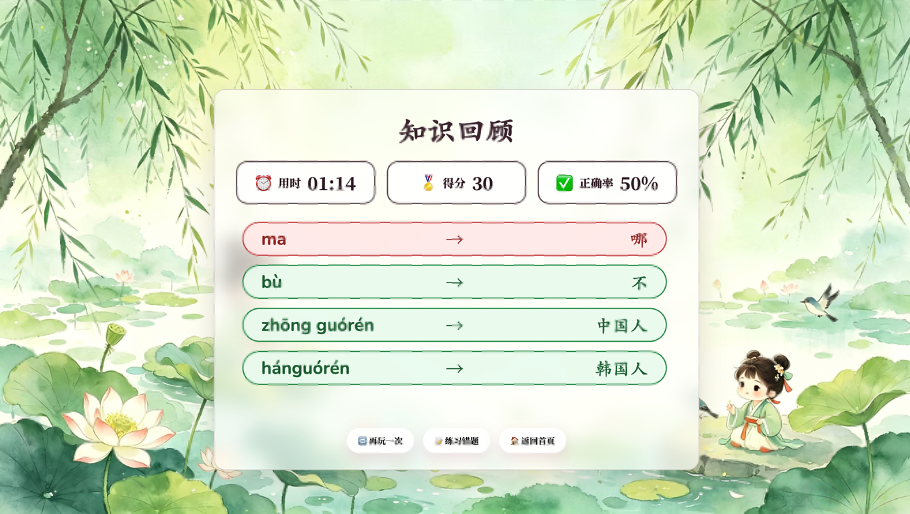
Chinese vocabulary learning can be challenging for beginning learners because it requires them to connect Pinyin pronunciation, vocabulary meaning, Chinese character forms, and vocabulary use in context. This study examined the effects of AI DeepSeek-assisted games on Chinese vocabulary learning achievement and post-use motivation among Thai lower secondary students. A quasi-experimental pre-test–post-test design with a nonequivalent control group was employed. The participants were 47 Mathayom 1 students in Chiang Mai Province, Thailand, comprising 20 students in the experimental group and 27 students in the control group. The experimental group used four HTML-based Chinese vocabulary games, whereas the control group participated in conventional learning activities. Both groups completed four 60-minute instructional sessions. Data were collected using a Chinese Vocabulary Achievement Test and a Post-Use Motivation Questionnaire and analyzed using descriptive statistics, paired-samples t-tests, and independent-samples t-tests. The experimental group demonstrated a significant improvement from pre-test to post-test and achieved significantly higher post-test scores than the control group. The control group also showed significant improvement after instruction. Following the intervention, the experimental group reported the highest levels of interest and enjoyment and of motivation and intention to continue learning. These findings suggest that AI DeepSeek-assisted games can be used as supplementary activities for Chinese vocabulary practice and review alongside regular classroom instruction.
