The Nepal Model and Politics After Public Discontent: The Transition of Power in a Fragile State Under Pressure from the Younger Generation
Article Sidebar
Main Article Content
Abstract
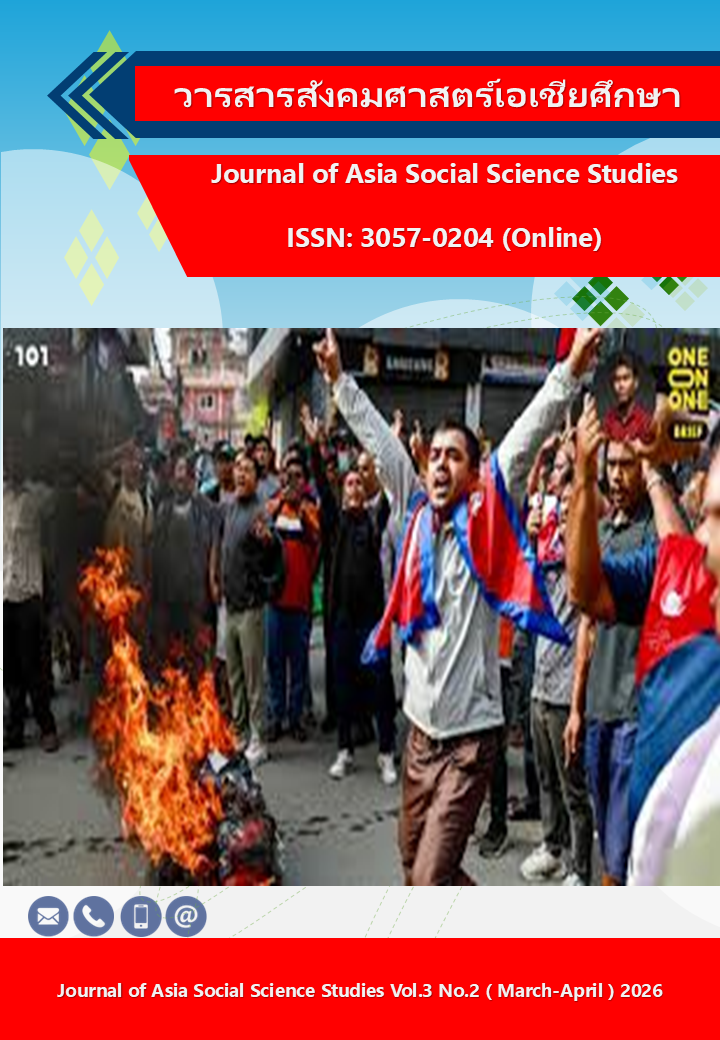
This article examines Nepal’s contemporary political transformation through the lens of structural discontent in a fragile state following the transition from monarchy to republic. It focuses on the role of youth-led movements in disrupting established power balances and the state’s response through what has come to be described as the “Nepal Model,” characterized by interim politics, elite accommodation, and efforts to restore state legitimacy. Drawing on theories of fragile states, democratic transition, and social movement studies—particularly digital activism and networked protest—the article argues that Nepal’s political trajectory cannot be understood through a linear transition paradigm from authoritarianism to democratic consolidation. Instead, it represents an ongoing process of crisis management and the institutionalized management of public dissatisfaction. The analysis demonstrates that youth movements, especially those driven by Generation Z, have played a significant role in reshaping political agendas and challenging elite-dominated legitimacy structures. Although these movements have not yet translated their social mobilization into sustained institutional reforms, they have exerted substantial structural pressure on the state and political elites.
In this context, the “Nepal Model” should not be interpreted as a successful model of democratic transition. Rather, it functions as a mechanism for managing dissent within a fragile political system, enabling state survival without deep structural transformation. The article proposes broadening the analytical framework of contemporary political studies to focus on the state’s capacity to manage structural discontent and on youth movements as long-term challengers to political legitimacy in developing and post-transition states.
Article Details

This work is licensed under a Creative Commons Attribution-NonCommercial-NoDerivatives 4.0 International License.
