
The context of natural disasters in Thailand: Flood management in Songkhla and lessons learned from state-community preparedness systems.
Article Sidebar
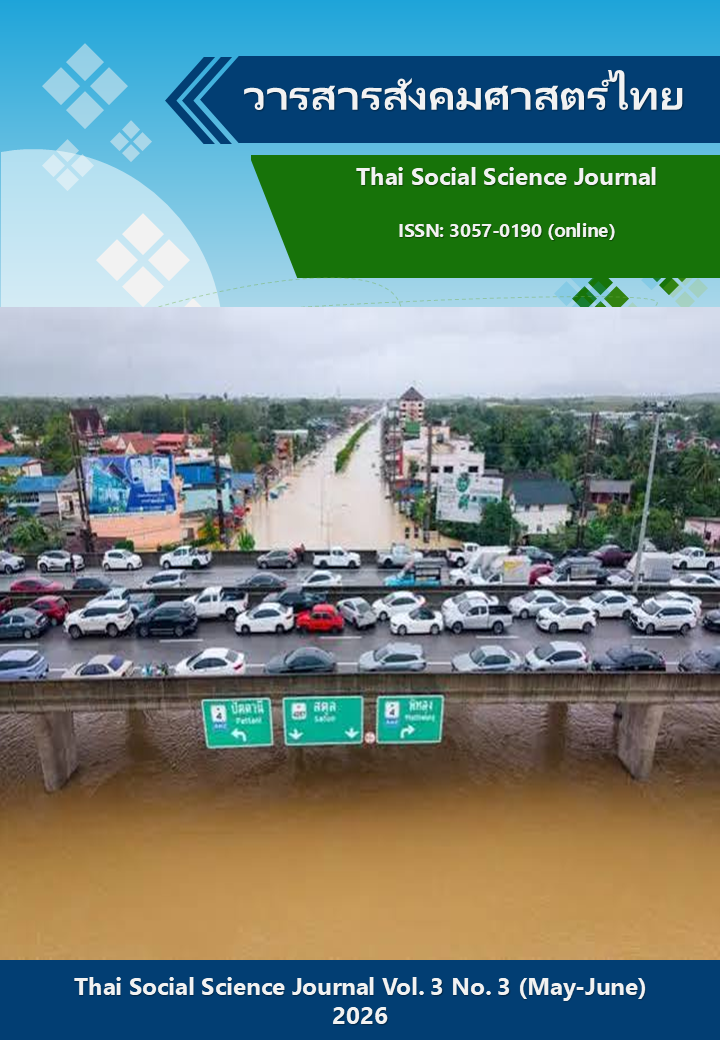
Main Article Content
Abstract
This article aims to analyze flood management in Songkhla Province from a state–community perspective and to draw policy lessons for other flood-prone areas in Thailand. The study employs the frameworks of disaster risk reduction (DRR), multi-level governance, and community social capital. Qualitative data were collected from government reports, academic literature, and case studies within the local context.Findings indicate that flood management in Songkhla exhibits a hybrid approach combining central government interventions and community participation. While the state emphasizes infrastructure and early-warning systems, integration with local knowledge remains limited. Strong communities effectively manage floods at the local level by leveraging social capital, volunteer networks, and collective knowledge, yet they face constraints regarding resources and internal inequalities. Key lessons suggest that co-governance mechanisms between state and community, accessible communication channels, and support for social capital can enhance the sustainability and resilience of flood management systems. The article provides policy recommendations for strengthening adaptive capacity and reducing structural vulnerability in future disaster management.
Article Details

This work is licensed under a Creative Commons Attribution-NonCommercial-NoDerivatives 4.0 International License.
