Biopower and Biopolitics in the Thai Education System: The Control of Bodies and The Reproduction of Ideological State Apparatuses
Article Sidebar
Main Article Content
Abstract
This article examines how biopolitical forms of power operate within the Thai basic education system, focusing on the ways in which everyday school practices contribute to the formation of political subjectivities. Drawing on a multi-framework approach that integrates Foucauldian biopolitics, Althusserian ideological state apparatuses, Bourdieusian habitus, critical pedagogy, and Adorno’s authoritarian personality, the study analyzes how discipline, hierarchy, and authority are reproduced through both formal regulations and implicit pedagogical practices.
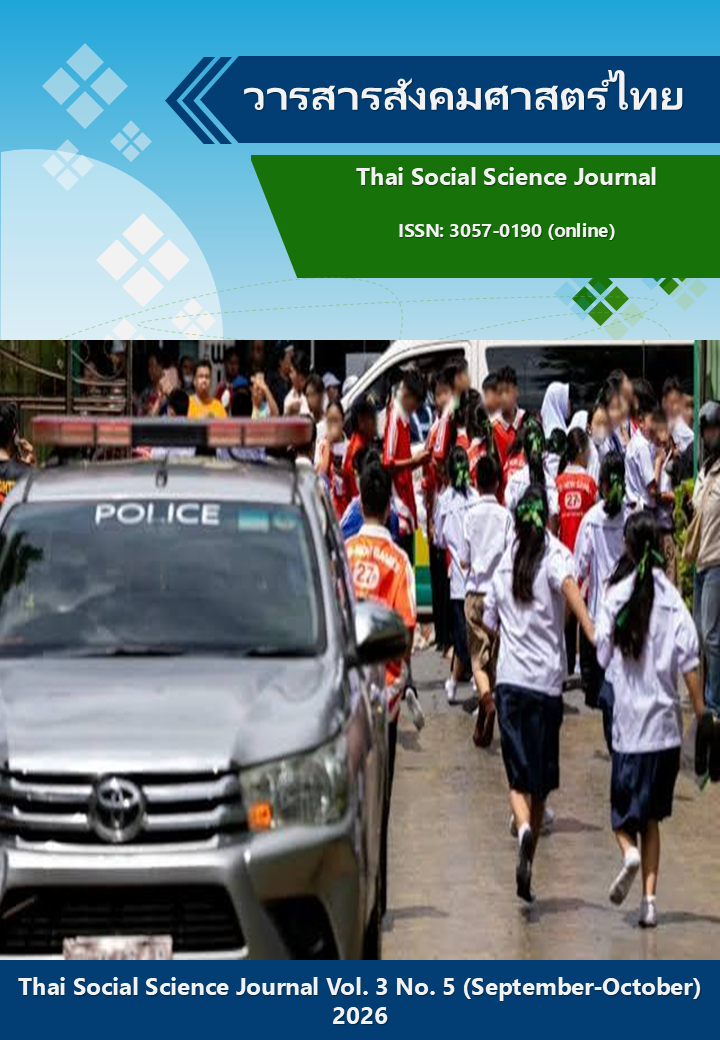
Empirically, the analysis is anchored in three illustrative cases: the 2020 Hair-Rights legal challenge, the Bad Students movement, and the early secondary-school activism of Netiwit Chotiphatphaisal. Through these cases, alongside textual analysis of ministerial regulations and curricula, such as the spatial-temporal discipline of the panoptic morning assembly and the quasi-military conditioning of the compulsory Boy Scout programme—the study demonstrates how bodily regulation, ritual practice, and ideological pedagogy function synergistically. Together, these mechanisms cultivate a bodily hexis and institutional habitus aligned with hierarchy, conformity, and deference to national-monarchical authority.
Furthermore, the article highlights the immediate socio-psychological impacts of this biopolitical governance. It argues that the normalisation of institutional strictness fosters an authoritarian personality syndrome, evidenced by the prevalence of hierarchical peer aggression and student-on-student bullying, which function as forms of displaced aggression within a highly regimented environment.
Yet, this disciplinary continuum is not absolute. The selected cases demonstrate how contemporary student bodies increasingly mobilise public and digital visibility to disrupt symbolic violence, transforming previously naturalised educational routines into active sites of political contestation.
The article argues that Thai schooling operates not only as a site of knowledge transmission but also as a mechanism of biopolitical governance that shapes students' orientations toward power, participation, and social order. By situating these processes within Thailand's specific historical and cultural context, the study extends the application of biopolitics beyond its Eurocentric origins. The findings contribute to the study of education and political socialization by offering a theoretically integrated and empirically grounded account of how everyday educational practices participate in the production of political subjectivity, suggesting that meaningful educational reform requires the transformation of underlying disciplinary structures.
Article Details

This work is licensed under a Creative Commons Attribution-NonCommercial-NoDerivatives 4.0 International License.