
Children’s and Juveniles’ Access to Firearms: Gaps in Thai Law and State Responsibility for Protecting Safety in Educational Institutions
Article Sidebar
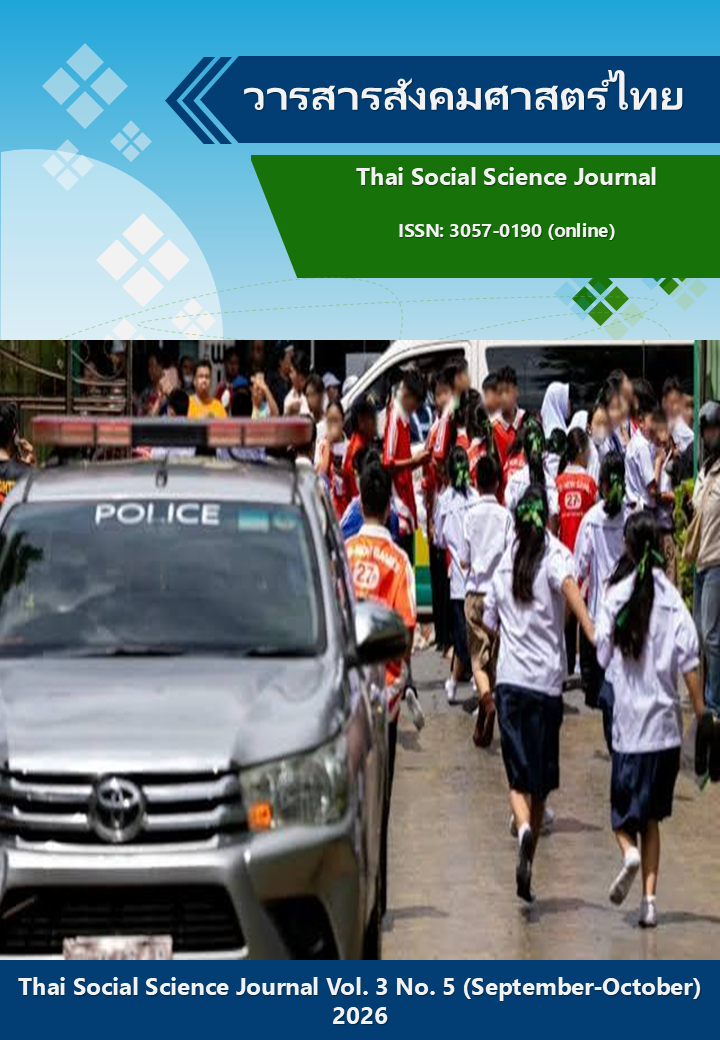
Main Article Content
Abstract
This academic article examines children’s and juveniles’ access to firearms, gaps in Thai law, and state responsibility for ensuring safety in educational institutions. The analysis draws on legislation, academic literature, and relevant Thai and international research. The findings indicate that, although Thailand has the Firearms, Ammunition, Explosives, Fireworks and Imitation Firearms Act B.E. 2490 (1947), the Child Protection Act B.E. 2546 (2003), and school safety measures, the existing legal framework focuses primarily on regulating firearm licence applicants and lawful owners rather than preventing access by unauthorized persons, particularly children and juveniles. Major gaps concern insufficiently defined firearm storage standards, owners’ responsibility when children gain access to firearms, post-licensing supervision, and inadequate coordination between firearm regulation and school safety systems. This article argues that state responsibility should shift from predominantly responding to and punishing violence after it occurs toward a preventive obligation. Four measures are proposed: establishing legally enforceable safe firearm storage standards and corresponding responsibilities for firearm owners; reforming licensing and supervision to regulate firearms throughout the ownership cycle; developing specific mechanisms for preventing firearm-related violence in educational institutions; and strengthening cooperation among families, schools, and relevant state agencies. Such measures must balance public safety with the rights, dignity, and best interests of children and should avoid stigmatizing students or imposing disproportionate surveillance. The article therefore proposes a conceptual shift in Thai firearm regulation from controlling “people who possess guns” to controlling “access to guns,” ultimately developing a comprehensive risk-management framework throughout the firearm life cycle. Such an approach would enable the state to intervene before legally possessed firearms become accessible to children and are used to cause serious harm within educational institutions.
Article Details

This work is licensed under a Creative Commons Attribution-NonCommercial-NoDerivatives 4.0 International License.