The Politics of Sacred Spaces: Religion, Historical Sites, and Territorial Claims in Border Disputes
Article Sidebar
Main Article Content
Abstract
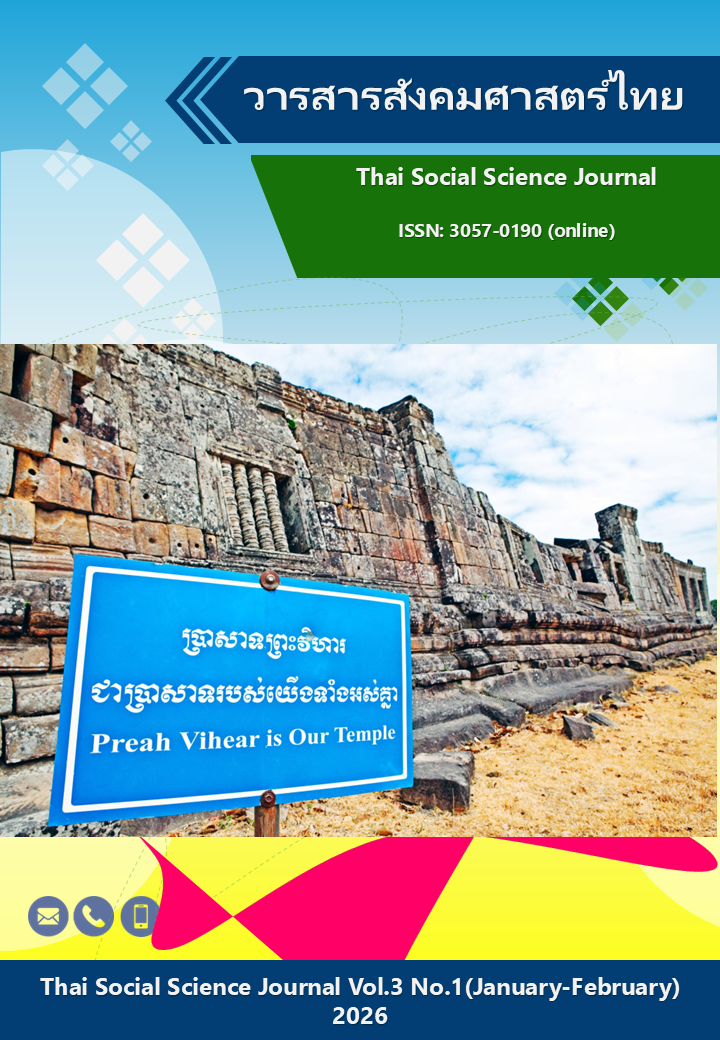
The Thailand–Cambodia border dispute involves not only territorial demarcation and state sovereignty but also sacred spaces, ancient monuments, and religious sites used as symbols of nationhood and morality. The politics of sacred spaces in this context intertwines history, religion, and nationalist discourse, rendering the dispute not merely a legal matter but also a moral and identity-laden conflict. Claims over sacred sites are thus elevated as acts of defending national dignity and historical legitimacy. This article examines the mechanisms of political legitimacy and the construction of “us–them” imagery through the case study of Preah Vihear Temple. Findings indicate that the use of monuments and religious sites as political instruments complicates and prolongs border disputes. Selective memory and the creation of moralized enemies significantly shape social perception and the relationship between the state and border communities . Local communities face tangible impacts in economic, social, and cultural dimensions, demonstrating that sacred-space politics extends beyond interstate relations. To manage such disputes sustainably, this article proposes strategies for establishing negotiation spaces and shared understanding that allow all stakeholders to participate in narrating historical and religious experiences. Cultural and moral compromise, alongside frameworks for shared heritage conservation, are key mechanisms for mitigating conflict and fostering trust between the state and society. Integrating legal, cultural, and moral dimensions is thus essential for effectively managing disputes over sacred spaces.
Article Details

This work is licensed under a Creative Commons Attribution-NonCommercial-NoDerivatives 4.0 International License.
