
July – September 2026
Vol. 2 No. 3 (2026)
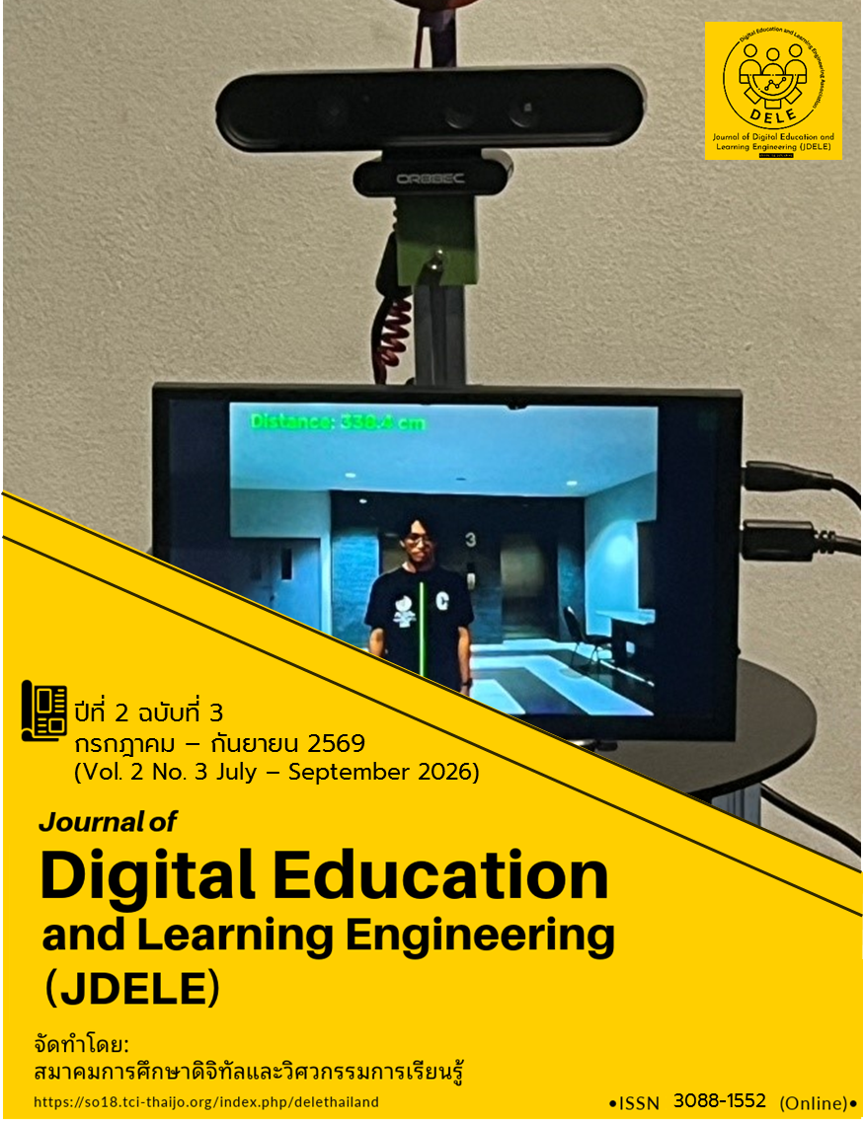
"Image processing and computer vision are increasingly important competencies in mechatronics and robotics education, yet lecture-centered instruction may leave a gap between algorithmic knowledge and practical application. Purpose: This study examined changes in undergraduate students' image-processing achievement..."
This cover image is derived from the published article by Tarinee Tonggoed et al. entitled Application of Contextualized 5E Inquiry-Based Learning in Undergraduate Image Processing Courses Using a Service Robot. For more information, click here.

April – June 2026
Vol. 2 No. 2 (2026)
"The proposed system integrates principles of the Liushu (六书) theory with core game mechanics, including character structure decomposition, classification-based gameplay, progressive challenge levels, and immediate feedback loops, in order to support structural understanding and learner engagement. Grounded in cognitive learning theory and game-based learning principles, the design positions game mechanics as the central mechanism through which learners interact with and internalize Chinese character knowledge. The system was implemented as an interactive learning application for upper secondary school students..."
This cover image is derived from the published article by Phonthip Sawat et al. entitled Design and Development of a Liushu-Based Interactive Game for Chinese Character Learning: A Game Mechanics–Driven Approach. For more information, click here.

January-March 2026
Vol. 2 No. 1 (2026)
"Recognizing vocabulary acquisition as a central yet challenging component of Chinese as a foreign language, the research first analyzed the strengths and weaknesses of widely used digital tools and games designed for vocabulary learning. Ten Chinese language learning games were systematically reviewed using defined evaluation criteria, including content coverage, design attractiveness, reward and feedback systems, and accessibility considerations. The findings revealed notable pedagogical affordances, particularly in contextualized learning and motivational game mechanics, alongside limitations related to usability and technical constraints."
This cover image is derived from the published article by Ying Zhang et al. entitled Evaluating Digital Games for Chinese Vocabulary Learning from Expert and Learner Perspectives. For more information, click here.

October – December 2025
Vol. 1 No. 4 (2025)
"This article proposes the “Hybrid Robotics Classroom” as an integrated learning model that combines Physical Robotics, Robotics Simulators, and AI Tools for Robotics Learning to leverage robotics education in Thailand under the digital era. Despite Thailand has made continuous progress in promoting technology education for students, significant challenges persist including resource disparities, high equipment costs, time constraints in hands-on practice and limited teacher readiness. The proposed model aims to mitigate these gaps by offering flexible, scalable, and accessible learning pathways that strengthen students’ logical thinking, problem-solving abilities, and future career competencies in robotics and AI."
This cover image is derived from the published article by Jirapipat Thanyaphongphat et al. entitled Hybrid Robotics Classroom: A Conceptual Framework for Advancing Robotics Competency in Thai Schools. For more information, click here.

July – September 2025
Vol. 1 No. 3 (2025)
"This study was significant in advancing research on technology-supported inquiry learning in primary education. By comparing the 5E model with Citizen Inquiry, it generated insights into how different inquiry-based pedagogical structures function when integrated with digital tools. The 5E model emphasized structured phases of engagement and scaffolding, whereas Citizen Inquiry placed greater emphasis on learner participation and ownership. Examining the relative effectiveness of these approaches in technology-rich environments informed educators on how digital platforms could be combined with inquiry frameworks to optimize student learning outcomes."
This cover image is derived from the published article by Pichaya Thongkhong et al. entitled Technology-Supported Inquiry Learning for Primary Students: A Comparison of the 5E Model and Citizen Inquiry on Understanding and Attitudes. For more information, click here.

April-June 2025
Vol. 1 No. 2 (2025)
"Artificial intelligence-based image processing technology plays a vital role in industrial manufacturing processes, where it is widely applied in quality inspection on production lines, defect detection in products, and automated process control. The integration of convolutional neural networks (CNNs) has significantly enhanced image analysis accuracy and efficiency. As a result, there is a growing demand in the labor market for personnel with knowledge and expertise in this field. However, the learning process for this technology is complex and often difficult to grasp, while access to learning materials and equipment remains limited and expensive, falling short of learners' needs."
This cover image is derived from the published article by Thanwa Pamonbuth et al. entitled Developing An Object Detection Using Convolutional Neural Networks Demonstration Kit. For more information, click here.

January-March 2025
Vol. 1 No. 1 (2025)
Information about the cover of this issue:
"In the context of next-generation digital education, digital education and learning engineering serve as two pillars that support and drive educational innovation. Digital education presents new opportunities and possibilities for learning, while learning engineering enables us to design and develop efficient learning systems that truly respond to the diverse needs of learners. Therefore, integrating these two concepts will lead to the creation of a flexible, adaptable, and highly efficient digital learning ecosystem. This ecosystem will not only address current challenges but also prepare for an uncertain and rapidly changing future. For this reason, educators must understand and be able to apply both digital education and learning engineering to continuously develop and improve the education system, in order to create valuable and sustainable learning opportunities for all learners."
This cover image is derived from the published article by Niwat Srisawasdi entitled Digital Learning Ecosystems 5.0 for Preparing Tomorrow’s Citizens: A Nexus between Digital Education and Learning Engineering. For more information, click here.